
#14: Tales From The Ball Way
Bonus: Why LinkedIn Makes Me Sad

Ironically, I peruse LinkedIn far more today than when I was grinding away in my career.
I barely checked it during those years. When I left Ball in 2022 I had a single LI “recommendation,” from way back in 2008.
I didn’t manage my network – I didn’t have much of a network outside Ball. Recruiters would call over the years. Mostly, I would ignore the calls (or briefly ponder the convoluted “do you know anyone who might be interested in this role that is exactly what you do now?” language of the headhunter).
For you younger kiddies, spoiler alert: That was a mistake. Nourish and feed your network, no matter how meaningless and trivial it seems.
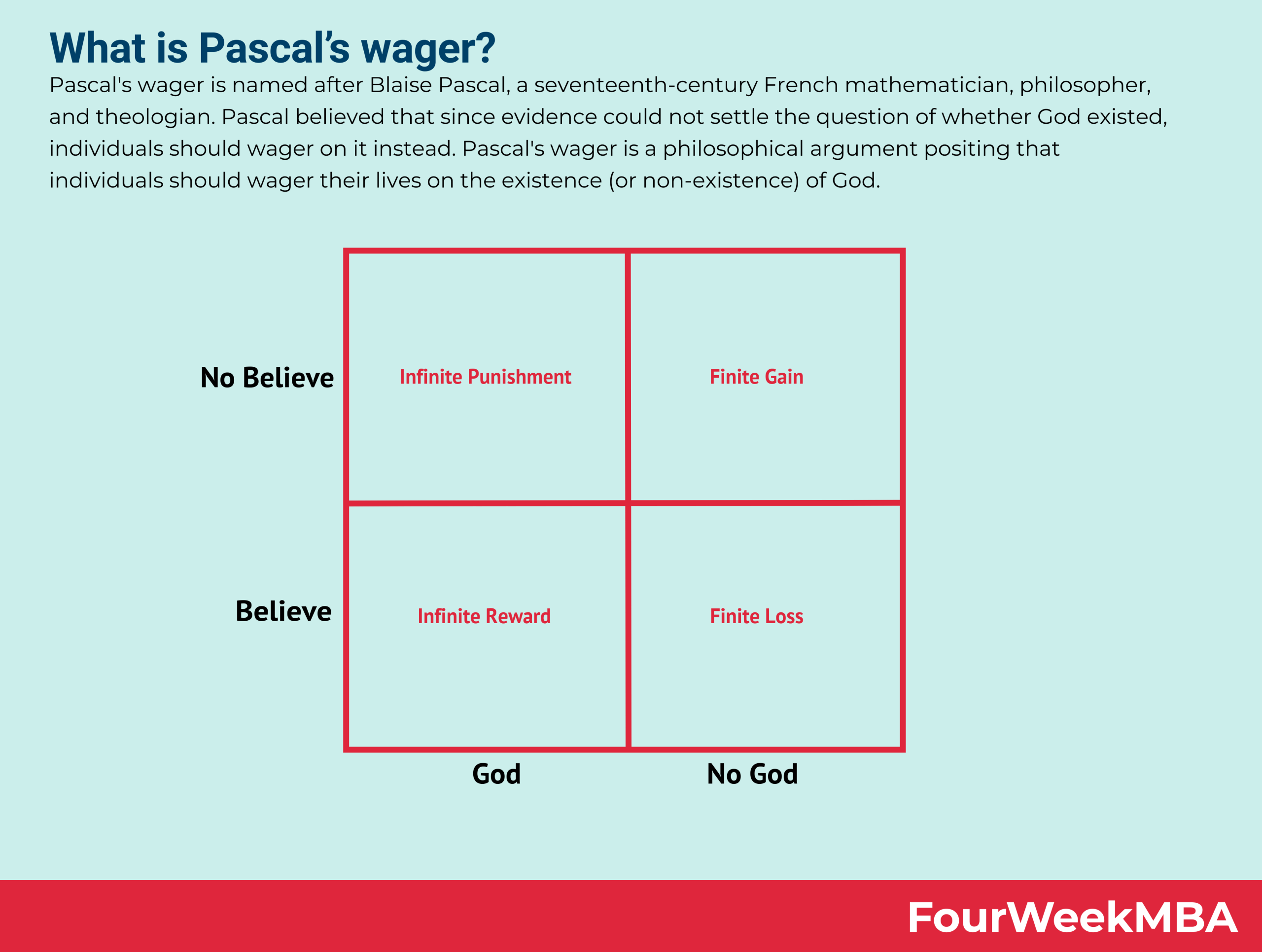
Sure, it might also never matter, but consider Pascal’s Wager. Believing it will matter doesn’t cost you much if you’re wrong, while not believing it will matter will cost you a lot if it turns out it does.
Back to the point: Was LinkedIn always as hopeless and pretentious as it is today? I vaguely remember it being more like a place to learn new things … new products, new trends, etc. Today it feels like a million corner preachers, shouting at you to do (or not do) whatever their topic is. And a lot of humble brags. It’s depressing.
I never paid much attention to LinkedIn because I loved my job, my career and yes, my company. I wasn’t looking to leave. That seems to be a rarity these days, judging from what I see posted now. It’s all about maximizing your personal gain while not being used by your employer. Ugh.
I wasn’t naïve about my company. Far from it. I always believed that on any day, I could be replaced. But I could also leave if I chose to do so. Seemed fair to me.
No, I l actually loved Ball because of what I experienced there. Pull out a chair while I share a few stories. This is going to run long, kiddies.

Don’t You (Forget About Me)
In 1993, Ball spun off seven, smaller businesses into a separate, new company named Alltrista Corporation. I had been at Ball for not quite two years. I was low person on the totem pole, as a communications specialist. My boss was a manager, her boss was a director, his boss was a VP and HIS boss was an exec VP who reported to the CEO. There was also another comms manager, who handled external comms while my boss executed internal comms.
When the spinoff occurred, within the span of about a week I learned that everyone between me and the exec VP was leaving Ball. Some were pursuing new adventures as part of Alltrista (with a sweet compensation deal). My boss notified us that her family was moving to Pittsburgh, where her newspaper man husband had been transferred to a larger city. The external manager found out he wasn’t going to be promoted to the soon-to-be vacant director role, got mad and left Ball to join an agency in Chicago.
That left lowly me … and the EVP, Duane Emerson. Who I had met a only a couple of times, and only in passing. In fact, I’m not sure I had even been in his office, located on the toney fourth floor of the Ball HQ building, where the execs dwelled.
I wasn’t particularly concerned about all the people leaving. I hadn’t been at Ball long, I was 29 and single and I figured I could find a job somewhere if I needed to. But when the admin for “Mr. Emerson” (all Ball execs were referred to by their last name at the time) telephoned me in my cube and said the EVP wanted to meet with me, I thought OK, this is probably not good news.
I took the elevator up, went into his office and Mr. Emerson, who I barely knew, asked me to sit. He then told me that he knew all the departures might be unsettling, assured me Ball had a solid transition plan and he wanted me to know there was a place for me going forward. He promised nothing. He just wanted me to know that things would be OK. We shook hands, and I went back to work … for another 29 years.
I’ve never forgotten Duane Emerson and what he did that day. He didn’t have to reassure me. Maybe he delivered the same message to others, I had no way of knowing. But Mr. Emerson thought that was the right thing to do, even for a lowly specialist like me, and so he did it.
That was Ball.
“I Will Survive” (I Hope)
A year or two later, I was in big trouble.
Ball had trusted me with an interview with the local Muncie, Ind., newspaper. Area high school students studying journalism were interviewing people at various area employers to ask how their companies had performed during the recently concluded year.
I prepped by studying our draft annual report, wrote talking points and then did the interview. In the published article, the students quoted me as saying Ball had completed its best year in its then 115ish-year-history. My message echoed what was in the still-in-process annual report, which touted record sales and earnings.
The article appeared on a winter Monday, in the business section. I read it that morning, and thought it was good. The students had missed a few details, and created a strange mish-mash of a quote from me, but nothing significant.
Someone else in town thought differently. John W. Fisher, former CEO and chairman of Ball, now in an emeritus role and based in the Ball Associates offices a few blocks away, directed his admin to summon me ASAP. [Ball was a family company for many decades, and Ball Associates was an organization that employed retired family members to work on emeritus and community efforts until they chose to fully retire].
The summons, frankly, freaked me out. Ball lore contained more than a few stories about Mr. Fisher’s reign, and his tendency to call employees on the carpet and sometimes even belittle them. He could be very kind, was always polite, but demanded a lot from his people. He had left Ball before I arrived there, but I had heard plenty of anecdotes.
Barely containing panic, I rode up in the elevator to inform my relatively new VP, Harold Sohn, of the call. Harold led the new comms regime, after everyone had left in 1993. I explained what had happened. Harold looked concerned, and said, “You better get over there.”
I put on my coat and trudged downtown under gray skies, crossing the 3-4 blocks to Ball Associates, a place I had never been before and which was identifiable by only a simple metal sign on the exterior brick walls. I went into the small entry vestibule and looked at a couple of unmarked doors. The admin intercommed down to me to open the door on the right, and come up the stairs.
I was escorted into Mr. Fisher’s office – where that morning’s newspaper was laying open to the Ball article on a conference table. Surrounding the newspaper were stacks of past Ball annual reports, what appeared to be print outs of old financial tables and even some photos of Mr. Fisher in various Ball settings.
For the next 20 minutes, John W. Fisher clearly and forcefully made the case that the past year in fact had NOT been one of Ball’s best ever. He cited figures from various financial summaries, picking up this annual report and that one, did some accounting math and cited numbers besides sales and earnings that he felt told the true story of Ball’s performance. I don’t recall those numbers exactly, but categories revolved around various definitions of “profitability” by different methods including sales per employee.
I said, “Yes, sir” and “I understand” a lot. When he was done, Mr. Fisher summarized by pointing out that Ball’s best years were actually long before the past year (during his tenure as CEO, notably).
He ended our meeting by saying, “Keep that in mind, next time you do a newspaper interview.”
I said I would, walked out and headed back to Ball’s HQ pretty much convinced I would be fired. How could I not? One of the 2 or 3 most legendary leaders of Ball Corporation had just called me on the carpet and told me I was an idiot.
When I walked back into the Ball HQ building, I half expected security to stop me and send me home. They didn’t. I decided to go see Harold. He was still in his office, and asked how it went. I explained, in detail, and I’m sure I looked miserable. Was this the moment where I would be let go? Did Harold even have a choice?
When I finished, Harold looked sternly at me from behind his desk, then stood up, and walked around to the front with his hand out for me to shake. “Welcome to the club!” he exclaimed, laughing. And he told me he had once experienced the same thing with John W. Fisher, as had many others.
Everything was fine, Harold said. I wasn’t alone. He didn’t have to share his own experience, but he did and said he thought it would help me understand that what I had been through was more a badge of honor than a career disaster.
That was Ball.
Over the years, I would run into “JWF” here and there, and he was always cordial. He never brought up the article, or our meeting, again.
What’s Debt Got To Do With It?
About 10 years later, I was pondering the role of debt in personal finance. All the experts said debt was always bad. Still, I wondered, if you used debt strategically, in ways that earned you a greater return than the interest on the debt, would debt actually make sense?
But I wasn’t a numbers guy. So one Friday afternoon I poked my head into the office of Ball’s chief financial officer (CFO), Ray Seabrook. He was a combustible Canadian, brilliant at what he did and very no nonsense. He intimidated some people. I liked that he was smart and a straight shooter, though I didn’t know him well personally.
“Ray,” I started (by then we were able to address all execs by their first name, a breakthrough!), “I’ve been thinking about debt in personal finance, and I wondered what you thought about it as a tool – is debt always bad?”
He looked up from his desk and said loudly and very quickly, “Hi Scott – comeoninandsitdown and let’stalkabout debt.”
For the next 20 minutes, the CFO of a Fortune 500 company drew on a white board as he described his view of the benefits and drawbacks of debt. He was engaging, he laughed a few times and he asked me a question now and then to get a better sense of my situation – nothing too personal, just to get new information.
When he was done, I had my answer – and I never forgot what he did.
That was Ball.
Every Rose Has Its … Bonus Check
Around 2008 or so, I was chatting with the exec admin to our president and CEO, Mary Rose. Mary was telling me about the history of Ball’s incentive compensation (IC) program (basically an annual bonus you received, based on the company’s performance, once you achieved a certain level in the company).
I might have been researching a story for our storied employee newsletter, Ball Line (started by John W. Fisher in 1942!).
Something she said made me think. Based on her description of the program, I should have been eligible for an IC payment one year earlier than I was actually included. I mentioned it in passing, noting that was weird but also it was more than 8 years ago, whatever, and left to go back to my office.
About 10 days later, Mary brought me a check for $800. She had heard my comment, researched on her own and confirmed I was indeed included a year late. So she had payroll pull my salary and the various IC formula numbers from 8 years ago and had them run a check – which she was now handing to me.
I was floored. Today $800 might not sound like a lot. It was a lot to me, and what’s more, it was completely unexpected and unnecessary. But Mary wanted to do the right thing, and she did, on her own.
That was Ball.
We Are Family
A year or two later, the president of Ball’s metal food container business asked me to accompany his leadership team on a plant visit to Findlay, Ohio. Michael Hranicka was, like Ray Seabrook, direct, intimidating and driven.
When Michael asked, I of course said yes. Not many corporate weenies were asked to travel with a division’s leadership team. It was a chance to spend time in a Ball plant (which I had grown to love from afar in my then-corporate role). It was also a chance to do some work for Michael, who I respected.
We flew to the plant, which was located less than 2 hours from Muncie, Indiana – Ball’s former home before relocating its headquarters to Colorado, and where my mom still lived.
I had not seen my mom in nearly two years. When I said I loved my job, I really did. I focused 100% on it, and my little family (at the time, a wife and two small children). There wasn’t time for much else, and we lived 1,100 miles away from my mom.
Now, when a Ball executive team visited a plant, it always had dinner with the plant’s leadership team. It was an opportunity to bond, as well as talk informally about the business and careers. Dinner with the Findlay team was on that evening’s agenda.
That afternoon, however, my mom called and said she and her husband wanted to drive to Findlay to have dinner with me, if I could do that. I was surprised, given the driving distance, and also thrilled, because it would be great to see them both.
But what would Michael say? He had flown me, at company expense, to the plant – and now I wanted to miss the team dinner? I assumed that would not go over well.
I was so sure it wouldn’t go over well that I asked one of the other leaders on Michael’s team what they thought I should do. He said, “Ask Michael.” Sigh. OK, I’ll take a chance.
During a break in the meetings, I asked Michael for a few minutes to talk privately. I explained my mom was 2 hours away, and wanted to come to Findlay for dinner, and I wondered if, well, it would be viewed as abandoning the plant and team to see her.
Michael grinned and said, “Go have dinner with her. We’ll be fine. We can catch up later. Family matters.” I looked closely at his face, to detect any issue with me bailing. I saw nothing. “Go,” he said again. “You need to see your mom.”
And so I did. We had a great dinner. The next morning Michael shared with me a few tidbits from the dinner I missed, and off we went. It never came up again.
Over the ensuing years, I got to know Michael better. He was, and is, a genuine believer in the importance of family.
That was Ball.
I could go on. There are more stories, mostly smaller moments. Maybe I will tell them in future substacks. But that was the company I was part of for 32 years.
I loved it. While I had opportunities to leave Ball, I never did.
And the stuff I see on LinkedIn today about dodgy employers and me-first career strategies? Those perspectives and stories were not my experience and are not how I view work even now.
When I’m in, I’m all in. It’s better that way.
That’s me.