#91: Becoming a Ball "Bridgebuilder"
Ball Culture Before "The Ball Way"

When you join an 111-year-old company with strong family roots, it already has a distinctive culture. You don’t thrive for more than a century without one.
During my 32-year career at Ball Corporation, I was tasked early on to capture, synthesize and share that iconic company’s culture in everything I did. I tried my best to do so.
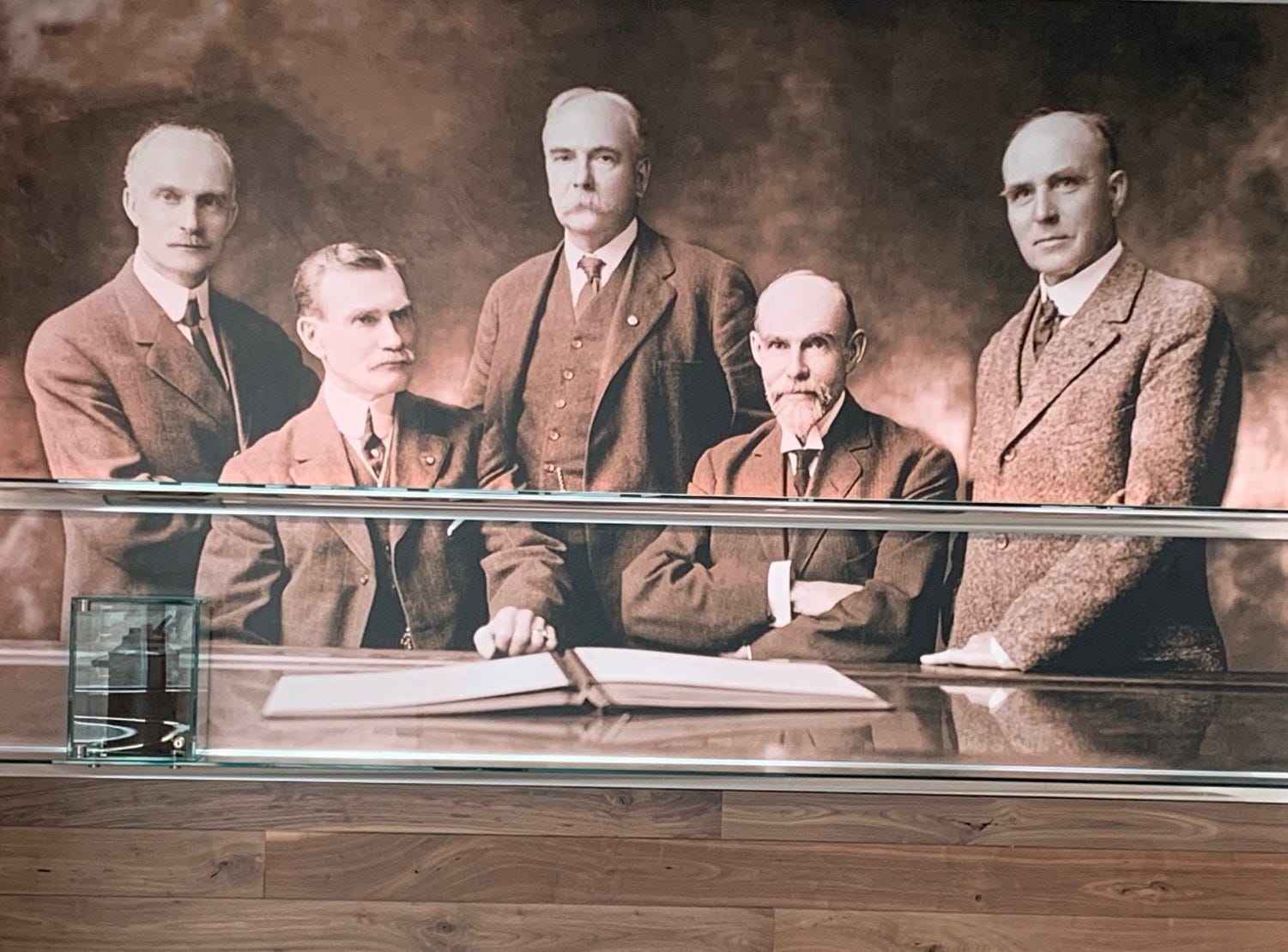
Still, while I helped define the “The Ball Way,” I did not create it. Thousands of Ball employees before me did that, starting with the Ball family. They founded, strengthened and believed in the Ball culture long before I played my role.
In fact, if you’ve read my substack articles about the end of that culture, you might be surprised to learn that I knew almost nothing about Ball - the family nor the company - before I was hired in 1991.
I had heard of Ball jars, of course, but that was about it. And as a newly arrived graduate assistant at Ball State University, a couple of miles from Ball Corporation’s Muncie, Indiana, headquarters, I rarely had cause to interact with the town, much less its leading corporations.
It was only happenstance that I had heard Ball was hiring at all. The Ball State professor who led my master’s thesis committee, Mark Popovich, idly mentioned it after my thesis defense in July 1991.
“I think it’s for a position to write their employee newsletter,” he said.
I had moved to Indiana from California for grad school, and intended to head west again. But even at 27, I had learned that it often paid to explore options, including those that didn’t seem important at the time.
So I did.
My introduction to Ball Corporation was quickly realizing the importance of “fit.” As part of the interview process, I was invited back not once, not twice, not even three times – it took four interviews over almost two months before I received an offer.
During the fourth interview I quipped, “You may as well hire me – I already spend all my time here!” I don’t recall if anyone at Ball laughed.
[Note: The interviews proceeded in this order: An initial phone interview with HR (where I learned from HR Sheri that my field was one of the few where you weren’t paid more for having a master’s degree, yay), an interview with my prospective boss and HR, a group interview where I met the extended communications team in a conference room and, finally, a high stakes finale again with my prospective boss as well as with her boss, the department director, Larry Miller. Much later I learned that Larry wanted to hire me, while my prospective boss wanted to hire someone else. Thank goodness for Larry! Sadly, he passed away more than a decade ago.]
Later, I learned that hiring new employees took time at Ball. In truth, many things took time at Ball back then (and continued to do so, for decades - it was sometimes referred to as “Ball time”). That’s because the people who ran the company knew how precious its culture was, and fit mattered - especially when bringing in people from outside Ball.
The second lesson I learned about Ball was that it was run by human beings, not business wonks. That’s not always true of employers.
I recognized this when, after they offered me the job in late August, I admitted I had paid months earlier for an almost three-week backpacking trip through Europe with two friends. Airfare, Eurail train passes, hostel pass, the works.
The trip was scheduled to begin in less than two weeks, in September. I had no idea how Ball would react to that news, nor what choice I might have to make as a result.
No problem, was Ball’s response, you can start when you get back. My first day would be Sept. 30, 1991.
There are few times in my life that I recall being unabashedly, giddily happy (it’s not you, it’s me). The week before that Europe trip was one of those times.
I recall walking into a local bookstore to buy a Europe travel guide, and the cashier asking me how I was doing. “I’m ECSTATIC!” I said loudly, grinning from ear to ear, startling the poor cashier.
The third lesson I learned was that I was a steward of something that had begun long before I showed up and would continue long after I left. It was a company philosophy that stemmed in part from Ball’s long history, and was often summed up by Edmund F. Ball through the poem, “The Bridgebuilder.”
My job was to build on what was already a strong foundation, and leave it better than it was when I arrived. It was not to storm the castle, tearing down existing walls as I go and demanding everyone adapt to my system because I knew better (IYKYK).
To that end, in my first weeks as a Ball employee I read everything I could about the company’s history and its approach to business – particularly how company leaders talked about culture.
Fortunately, there was a lot of material. In addition to a book about Ball published in 1880, I had access to speeches and guidelines provided by past Ball CEOs, family members and other key figures in the company’s history.
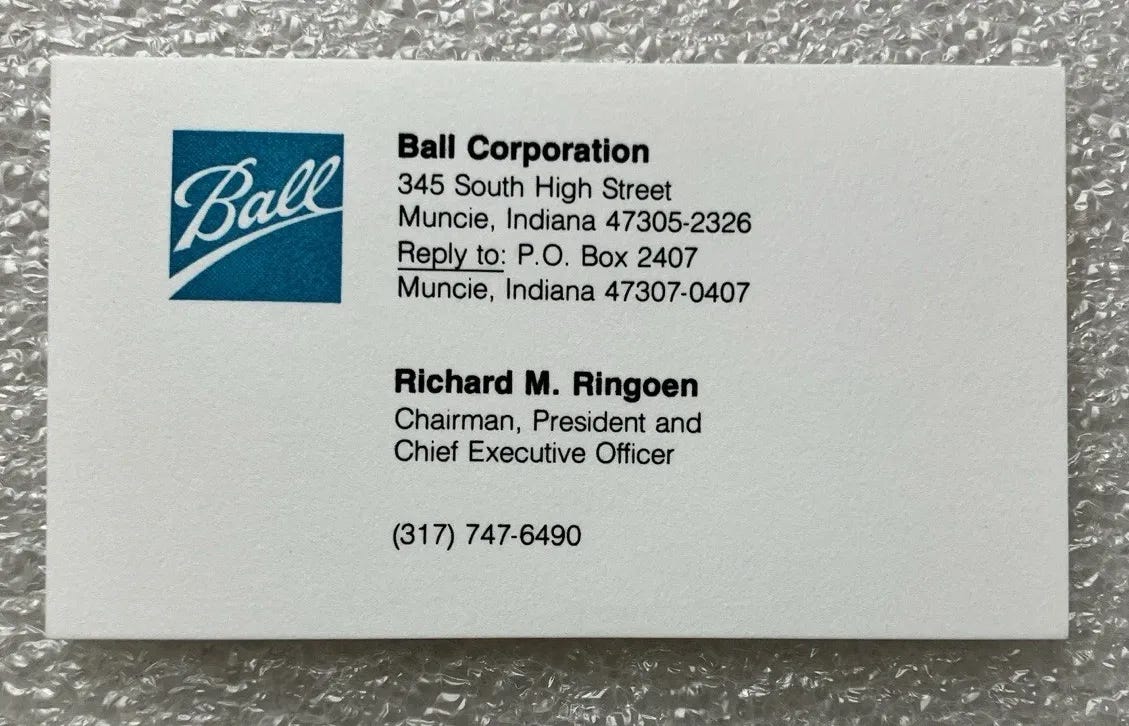
And culture was a hot topic at Ball in 1991. Just five years earlier, then Ball-CEO Richard M. Ringoen had given a keynote speech titled “An Examination of Our Corporate Culture” at the company’s 1986 management meeting.
[Note: That management meeting, held every two years, was the third in what became a tradition that continues today at Ball. The theme of the very first management meeting was “Managing for our Shareholders,” while “Building On Success” headlined the second gathering.]
[Note: Which reminds me of one of the few times I argued years later with Dave Hoover. Before he became CEO he was CFO, and as we were working on a company vision/mission/strategy framework in the late 90s he wanted one of the main tenets to be “to earn a return for our shareholders” (there might have been a few more words defining how much of a return, but that was the main point). I felt like that goal was understood, given we were a public company, and it complicated what was a pretty clear message and should be removed. I felt so strongly at the time about it that I employed a communications trick that worked more often than not in my career – on a revision of the draft, I simply omitted the line. In this case, it did not work - Hoover noticed. And I remember him looking at me, sternly, and saying that while yes, public companies should earn a return for shareholders the truth was that not all of them prioritized it and he wanted our shareholders to understand how important that was to Ball’s management team. It stayed in. I eventually realized he was right, as usual.]
In that 1986 speech, Ringoen - who was the first CEO from outside the Ball family in decades, succeeding John W. Fisher (who married a Ball sister) and before him, Edmund F. Ball - wanders through the Ball culture, starting with its family roots and walking listeners up to the present day.
“We have to be a little careful as we examine our corporate culture,” he says early on. “We have to ask ourselves, is this the culture we really want? If it isn’t, how should we attempt to change it in the years ahead? We should understand it, we should not trifle with it, but capitalize on the many virtues that may exist within this culture.” [In other words, leverage the culture to drive desired behaviors - the business case for “The Ball Way.”]
I never knew Ringoen, he left Ball before I joined and he passed away before I had been at Ball for two years. But that mindset was similar to the approach I developed to define “The Ball Way” program more than a decade later.
At his speech, Ringoen noted that 127 descendants of the five founding Ball brothers owned 41 percent of the company’s stock. He addressed the use of “family” in business. He even mentioned “responsibility to God,” and added, “I always get in trouble when I talk about this, but I think it’s very important and probably should be first on the list, nevertheless.”
[Note: I have no info on the 7-minute video clip below with Dick Ringoen, but he hits some of the same points in the video as he did in his speech - plus you can see a little bit of Ball’s former Muncie, Indiana, headquarters and home as well as other Ball leaders around the conference table (including Larry Miller, to Ringoen’s right at the table wearing a blue jacket … RIP, Larry, and thank you for hiring me.]
Ethical standards is a major theme - we translated that into “integrity” in “The Ball Way.” He speaks out about prejudice, and states simply “if we are all part of the same family, we can have no prejudices.”
He mentions the time Ball’s new Saratoga Springs, N.Y., beverage can plant hired for 200 positions and the company received 20,000 applications. “We never have any problem filling jobs or keeping people with us,” he says. Ball’s culture played a key role in the company’s unusually low turnover that continued for decades.
Ringoen speaks out against “politics and bureaucracy,” he highlights the virtues of being “heavily decentralized” and he teaches the lesson of “performance begets autonomy.” As I’ve already written in my “The End of The Ball Way” series, many of those tenets changed after about 2010.
He even talks about the fact that every employee “is an ambassador for Ball,” a concept that would come back in a big way 30 years later under Jim Peterson, VP of Corporate Affairs and my boss for a time.
Ball’s archives were filled with speeches, presentations and even books that talked about the company’s special culture. I had plenty of material to help me get up to speed.
The problem was, there was little consistency among descriptions of Ball’s culture. Oh, the history was the same, and almost everyone talked about ethics and customer service.
But after that? Some said customers were the most important stakeholder, others said shareholders. Some talked about how good Ball was at managing performance, and yet I knew, as someone who worked on the company’s employee engagement survey, that employees felt we did not manage poor performers effectively.
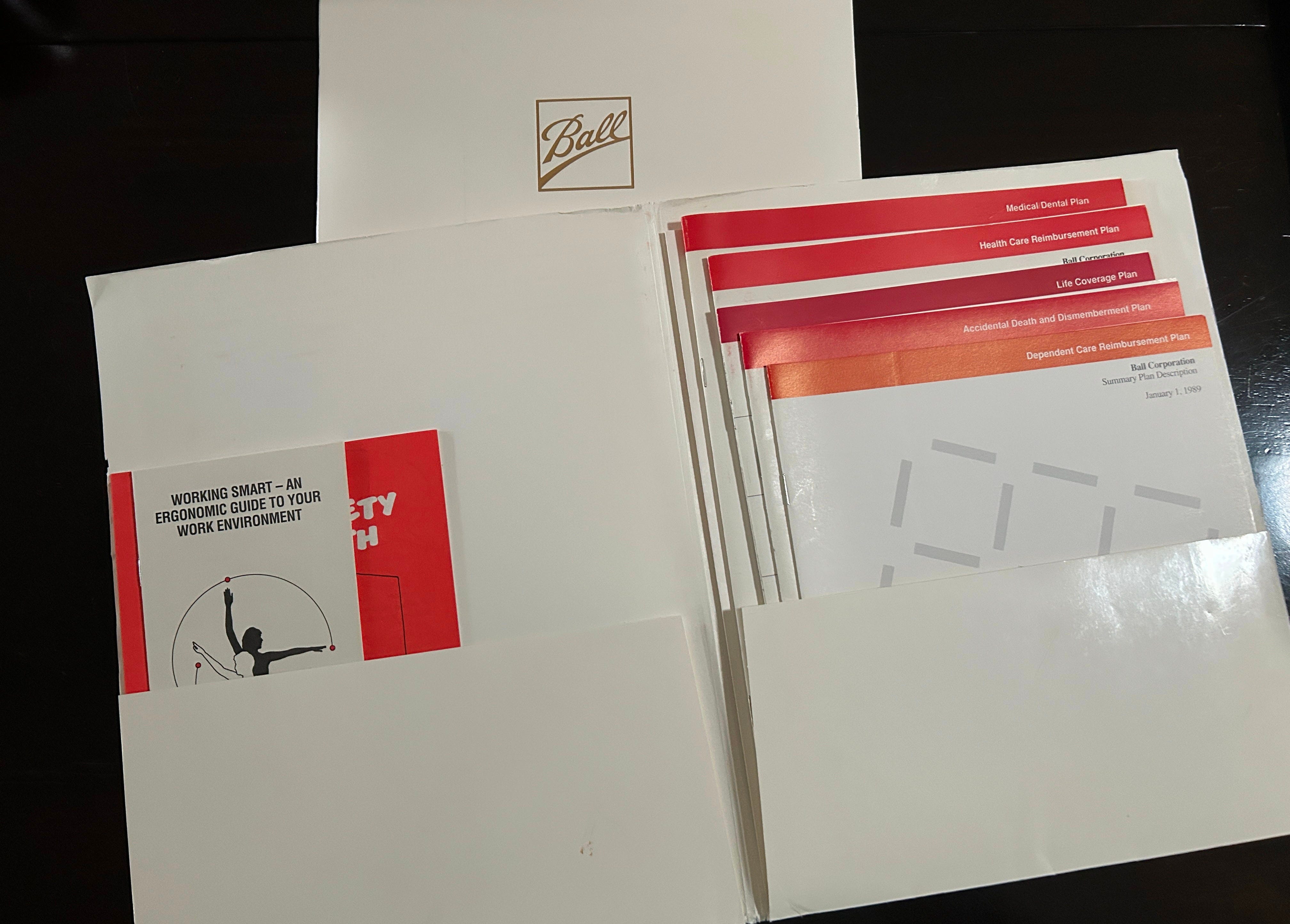
Among my initial new employee materials, there was even a handout from outside Ball titled, “Profile of a Productive Employee.” It contained excerpts taken from a study called “R&D Productivity,” by Hughes Aircraft Company.
[Note: So you don’t have to Google: The Hughes Aircraft Company conducted a landmark 1978 study titled R&D Productivity: An Investigation of Ways to Valuate and Improve Productivity in Technical-Based Organizations, authored by Robert M. Ranftl. This work was part of a broader two-year research effort involving over 3,500 managers and executives across 59 organizations, later expanded to more than 150,000 copies in print.]
The two-page summary includes sections titled, “Is Well-Qualified for the Job,” “Is Highly Motivated,” “Has a Positive Job Orientation,” “Is Mature” and “Interfaces Effectively.”
The subpoints under each of those categories resemble the categories provided in the Ball employee performance evaluation form we used for many years.
So while Ball’s long, proud history and family roots were clear, how we chose to describe our culture varied. If you asked five senior leaders back then to describe the culture, their answers would be in the same ballpark but the words they used would be different – and different words meant different things to different people.
That is where I came in, and that was how the “The Ball Way” was born.
As I was writing this piece, an email from the Ball retiree group arrived in my inbox. It detailed a meeting one of the retirees had recently with Ball’s current CEO, Ron Lewis.
The email noted that Lewis seemed to recognize the role of Ball’s culture in the company’s past success, and had expressed a desire to “get back to our roots.”
The retirees appreciated that message, as did I. Still, I hope Lewis is up to the challenge. It won’t be easy to recapture what made Ball special – the world is very different today than it was even during my years at Ball. So are employees.
But recognizing what made Ball special is a starting point. I wish him well.