
#90: Magical Moments
A Bass Player's Pursuit of Musical Nirvana (Epilogue)

When I first reached out to my stepdad two months ago to pitch the idea of writing a substack article about his life as a professional bass player, I tried to prepare him for the impact – or lack thereof.
“I’m not sure how many people will read this,” I said. “I have about 150 subscribers, most of them unpaid. It’s unlikely to go viral.”
Webber laughed.
“The great thing about this is - who cares?” he said, supportive immediately.
Relieved, I told him his life in music was a story I thought should be shared, and while he probably wouldn’t look at his past as warranting attention, it would be interesting to many.
After all, everyone knows what the lead singer thinks. But it’s the bass player who is always watching, always keeping time, always anticipating the next beat. Bass players make everyone else on stage look good.
And besides, I added, almost as an afterthought, I have to write. It’s why I had started my substack. His was a story that would allow me to write more.
He nodded, then said something that tied us together in a way that I had never considered.
“Writing is for you, like playing music is to me,” he said. “It’s our muse. It’s who we are.”
I realized he was right.
When we started our conversations for these articles, I envisioned 2 or maybe 3 parts to his story. It grew to become 5, and even that felt incomplete. That’s why you’re reading this epilogue.
There’s more to the story.
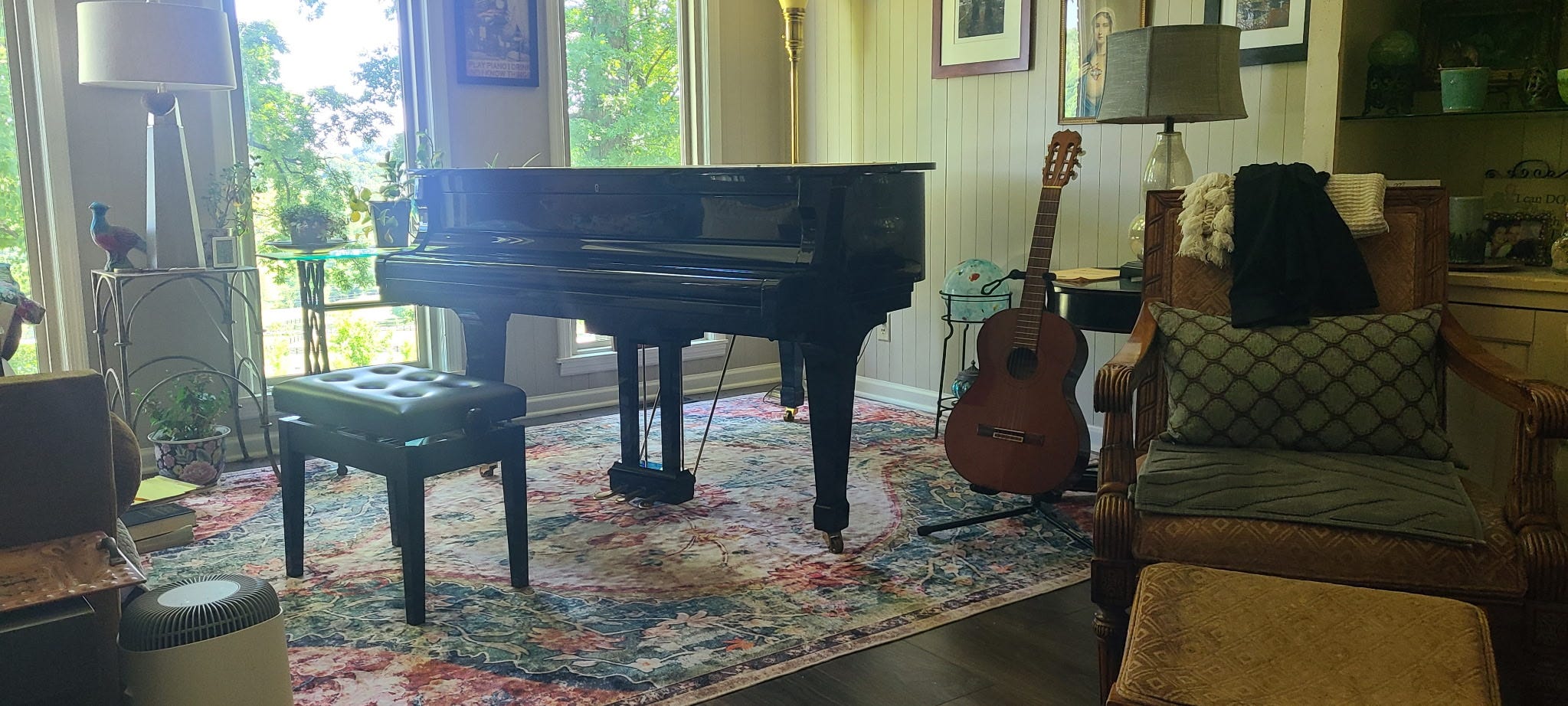
My stepdad and I didn’t talk a lot over the years, after his divorce from my mom in 1980 when I was 16. We lived 1,000 miles apart for most of that time, and I’m not much of a talker. He was busy with his life in Nashville, I was building a career and starting a family.
Through these conversations for my substack, however, I learned about the life he led that I only ever saw in glimpses.
I also got to know more about people who were important in his life. Some were musicians, some were songwriters, a few were passing encounters, one is his wife, Janie, who he married in 1983.
About halfway through this series of articles, Webber told me that one of those people, Danny Darst, a long-time songwriter and actor who had worked with my stepdad on several projects (see part 5 of this series), wanted to call me.
Darst’s name had popped up several times in our conversations. I knew him only through my dad’s stories, and subsequently, Darst’s website. Darst’s songs, about wisdom and loss, hard experiences and individual strength, were songs crafted by a writer.
“Do you know what he wants to talk about?” I asked Webber, curious.
“No idea,” was the reply. “He’s been reading your articles.”
Darst had politely asked my stepdad for my cell number, and I said go ahead and share it with him. A week later, Darst called me.
“I really like your writing,” Darst opened. That surprised me. This man had made a life from writing.
He then asked if I minded if he asked about my “academic background.” After I answered, Darst, 78, volunteered he had “a fifth-grade education, and a PhD in stupidity.”
He had seen a lot, and his life experiences colored every song he wrote. “No one comes to writing from exactly the same place,” his gravelly voice intoned. He noted his background came mostly from film, and relies on “operating in the visual.”
Musicians like Mike Webber, “the guys on the bus,” Darst called them, “have the hardest life I can imagine.”
“I have tremendous respect for them,” he said. [Note: The musicians in the traveling band for a successful act, and the musicians who play on the recording, “are very rarely the same,” Webber notes. They are like two different subspecies of musician, one more feral, one more domesticated. Webber was once referred to as a “wild cat bass player.”]
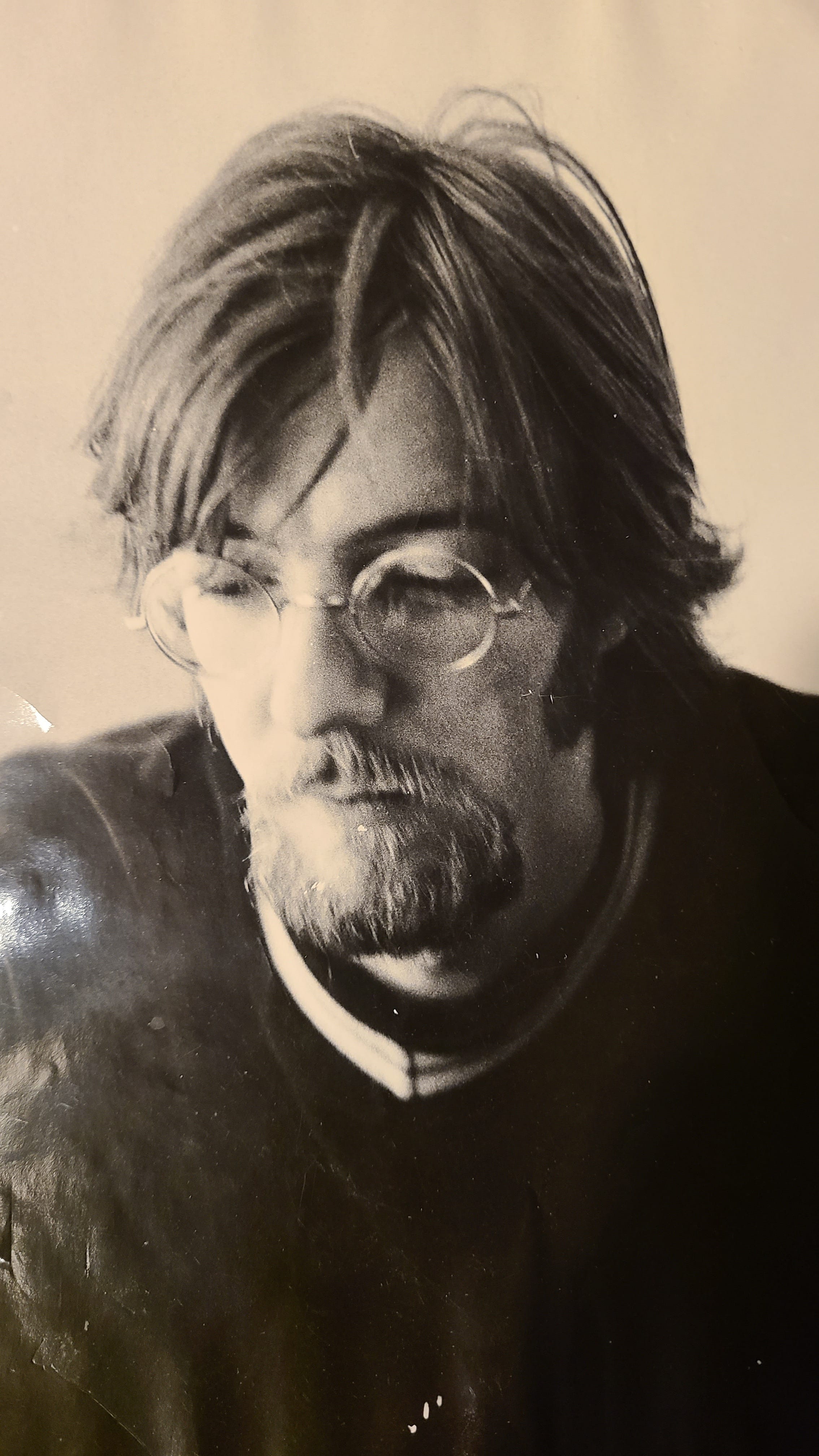
My stepdad, who had been on the road for much of his life, “knows about the gray areas,” Darst said. He could play any style of music, and while most musicians “… are more self-serving,” my stepdad, Darst said, “though he can be ornery, is a gentle creator, and he can jump in and not make it about himself.”
Darst had no way of knowing that the way he described my stepdad in music was the same example I tried to set in my professional career in communications. My frequent mantra? “It’s not about me.”
Darst then got to his point. “The biggest problem all writers face, is a dry well,” he said. Even writers who are on fire for several years eventually end up “thrashed,” he added.
“But it’s no problem if you know what to do,” Darst concluded. And then gave me advice on how to both keep writing, and to make my writing even better.
Our call concluded with his offer, now that I had his number, that if I ever wanted to talk about writing, I was welcome to call him and do so.
I put my cellphone down, and realized: I had just had one of those “magical moments” my stepdad had talked about in music when, simply because you are out there taking swings, something unexpected and satisfying occurs. [Note: Mr. Darst if you are reading this, I am in the midst of Moby Dick now and Aquinas is next. Thank you.]
As a result of choosing to write this substack, which at the moment contains 90 separate pieces about my career, my stepdad, my pursuit of purpose and meaning and an occasional rant, I had encountered two unexpected and wholly satisfying experiences.
The first was the example of my stepdad and recognizing his driving passion over the years - a consuming and endless desire to play music, regardless of its impact on other aspects of his life, and the people in it. Some would say devoting your years to what you love is one of the best ways to live. I now understood my stepdad in a way I never had.
The second was the grace of Danny Darst, a thoughtful observer and storyteller who took time to tell me he liked how I wrote. What’s more, he offered advice on how to keep it going, with the perspective of someone who has faced that obstacle and many more throughout a career of interpreting life around him.
I’ve always thought that there is no better counsel than advice that comes from people who have already lived the words they share with you. Through this substack series about the life of a bass player, I had that experience - twice.
Mike Webber was right, it doesn’t matter how many people will read this. For me, the magic has already happened.