
#89: Limo Mike Writes A Song
A Bass Player's Pursuit of Musical Nirvana (Part 5)

[Disclaimer: I am not a music historian. These articles are based on my conversations with my stepdad, Mike Webber, and whatever info I could confirm with a quick Google search, as well as, here and there, my own memory. I do not let exacting accuracy get in the way of the tale.]
If you scroll through Mike Webber’s Facebook posts back to around 2009, nearly 20 years after his hitch as the bass player for The Judds had ended, you’ll find a series of humorous video vignettes from “Limo Mike.”
Limo Mike is an online persona Webber created as part of his part-time gig driving a limo for hire. In those Facebook posts, Limo Mike often “reports in” while ferrying teenagers to prom or adults to and from the airport, providing video updates as he waits at Nashville landmarks for his charges to appear.
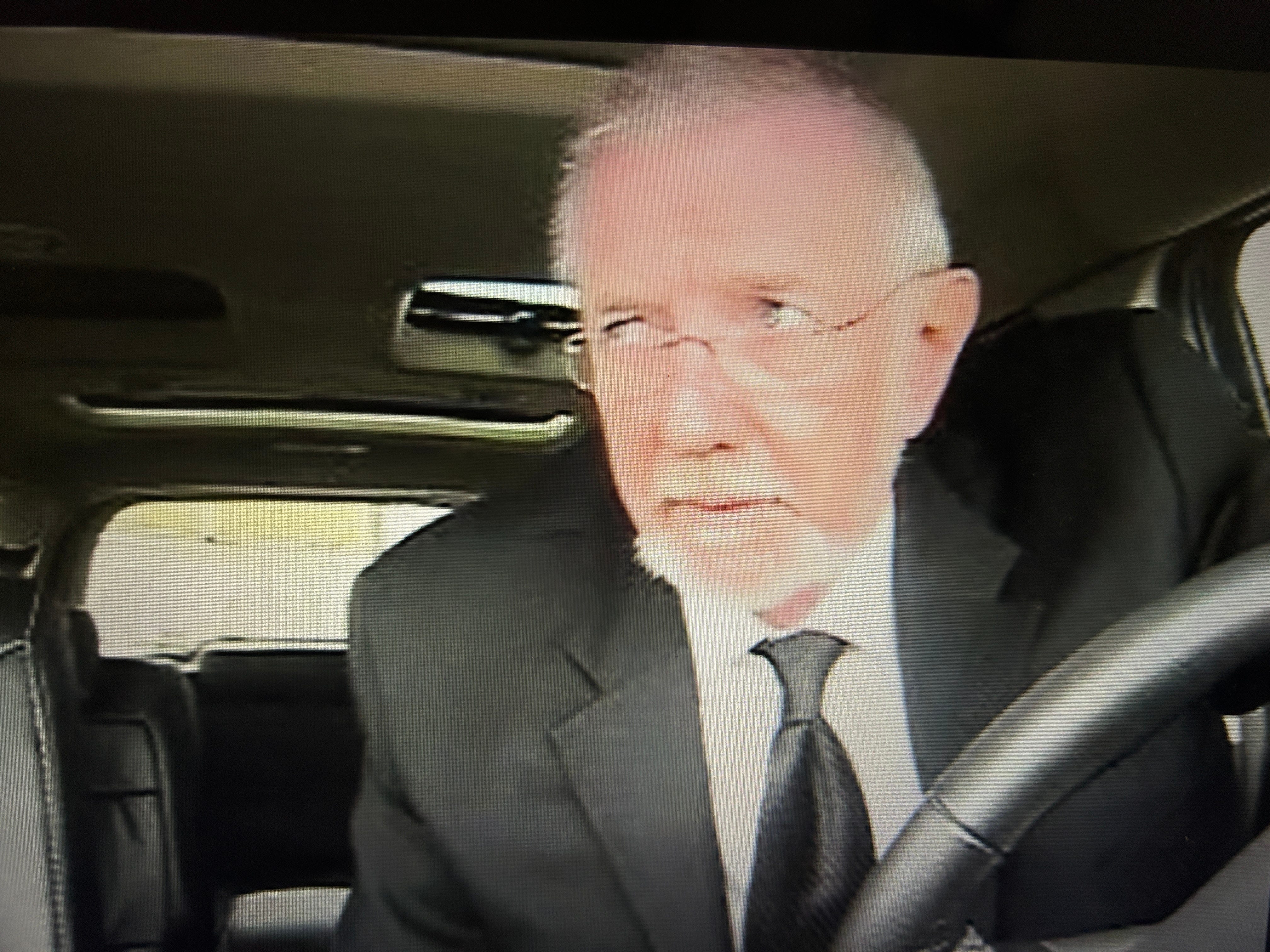
The vignettes are amusing, clever at times. Yet for me they also created a sort of visual cognitive dissonance when it came to my stepdad’s music career. That’s because Webber started driving a limo after touring the world as The Judds’ bass player for seven years.
Three decades as a professional musician, including globe-trotting in not one but two different chart-climbing acts, and now bass-playing, crowd-pleasing “Pops” was “Limo Mike?”
What about the mansion? Where the heck is MTV Cribs? Isn’t that how a successful music career works?
“It’s an impossible thing to do, what musicians do,” Webber mused, when I asked him about that transition. “Musicians at the top of their game take the stage at peak performance, show after show, day after day, for years. That’s hard to maintain.”
“I’ve discovered over time that little musical things that continue, like with Clint (Holmes), and with The Judds, are reasonably magical,” he goes on. “They occur, or they don’t occur. All you can do is keep playing.”
Webber fully intended to keep playing after The Judds’ farewell performance on Dec. 4, 1991. He started hustling for gigs right after that Christmas, making the rounds yet again in a quest to create something magical once more.
This time, however, those efforts were derailed by a sudden health issue. A collapsed lung in January 1992 led to several hospitalizations and then major surgery in February.
Webber’s surgeon at the nearby Vanderbilt University Medical Center? Physician Bill Frist, who two years later would become a U.S. senator. [Note: More than two decades after the surgery, Limo Mike picked up Frist at the airport, much to Frist’s surprise. “I would say he saved my life,” Webber says. “Without that operation, things would have steadily gone downhill from there.”]
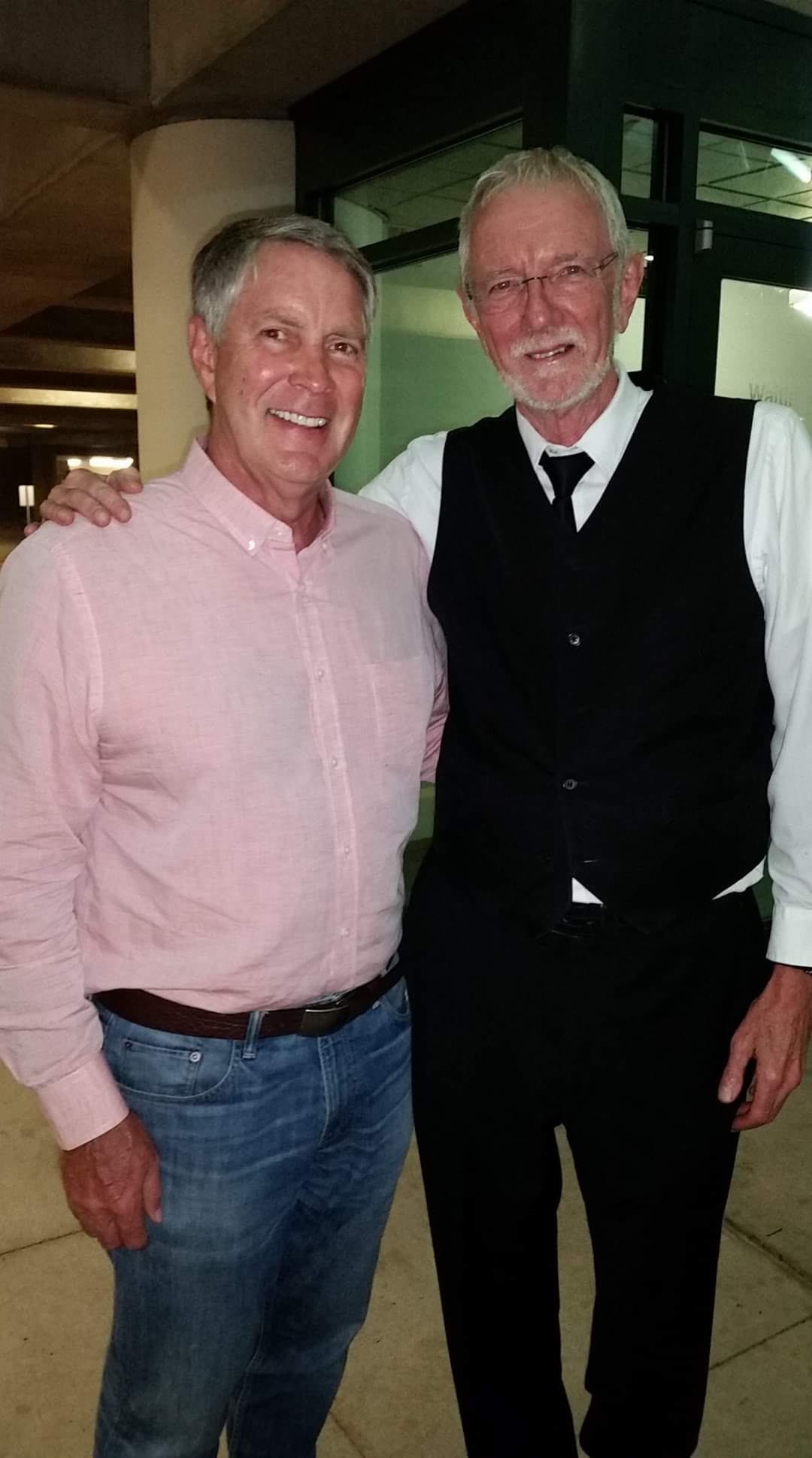
Happily, Webber recovered. The recuperation period, however, took six long months. All the while, the Nashville music scene kept changing.
“In Nashville there are a thousand bass players, and at any one time about three bass players do all the recording – everyone is locked into who they use for sessions,” Webber said of a market he had seen become hypercompetitive while also somehow still thriving on relationships. “The playing field was loaded with talent, and a lot of people chased (gigs) 24/7.”
When he returned to his bass in late 1992, the pickings were slim. Weekend jazz gigs were available here and there, but landing more lucrative recording sessions and connecting with breaking new acts was much harder – even for a musician who had been part of one of the highest profile acts in town.
As he slowly returned to the music scene, Webber took on “day jobs” to support ongoing cash flow. For several years he was a “lens tech” in a local optical store where his wife, Janie, also worked.
When that ran its course, Pops hit the road again in the late 90s – this time, in a limo. Like his sense of humor, Limo Mike’s Facebook videos are dry and understated, interjected with the knowing laugh of a man who has been around.
It’s as if one of the old SNL “Wild & Crazy Guys” brothers had returned, older and calmer, and landed a job manning the door at a hot, new night club after having seen many other hot, new night clubs come and go.
For Webber, the fact that he was once flying high as part of a Grammy-winning county music act, and now was behind the wheel of a limo for hire, didn’t enter his mind.
“It was a means to an end - the only thing I was really cared about was making enough money to pay the rent,” he recalls. “I was just hustling, which was OK. And you figure in time, something (musical) will pop.”
The carousel might go around once more.
In any case, while the day gigs were important for income, they were never Webber’s focus.
What mattered, what had always mattered to Mike Webber, was playing music.
Whether he wrote songs in his Franklin, Tennessee, music room or played jazz at yet another weekend gig around town, Webber’s pursuit of musical nirvana continued.
Today, at age 80, that desire is as strong as ever.
In fact, when I first brought up to him the idea of writing about his experiences as a professional bass player, I made the mistake of asking if, back in the heyday of his hitch with The Judds, he had thought about life after music.
After a long silence, he said, in a tone that contained just a hint of defiance, “I’m not sure I have ever considered that, as of yet.”
And that brings us back to his original song, “Ridin’ Away.”
Back in the mid-80s, Webber – in the midst of his success with The Judds – came across photographs “of old cowboys by campfires,” he recalls.
“Those photographs inspired me,” he remembers. “I thought, ‘I’ll write me a country song.’”
And so Webber wrote a country song. He hated every minute of it.
“It took forever to write the thing, just thinking of the right words,” he says, frustration still in his voice. “I nearly finished it, and thought ‘that’s the last time I’ll try to write a song again!’”
Then he set “Ridin’ Away” aside … for four decades.
Enter Danny Darst.
The mosaic of American stories has many sources. Danny Darst owns a piece of that mosaic.
Darst is a songwriter, performer and actor (Silence of the Lambs, among other films). The best way to describe his work is what’s already written on his website: “Darst’s compositions, steeped in poignant narratives and heartfelt emotions, reflect the commonality of human experience. Each composition encapsulates an array of universal sentiments – love, loss, restlessness, resilience, heartache – etched onto the very soul of his melodies.”
Darst and Webber had hit it off in the late 90s, after being introduced by songwriter Danny Potter (a member of the Atlanta Country Music Hall of Fame who has collaborated with many artists, including Johnny Cash and Vince Gill). That began a 25-year-plus connection that has included dozens of private jam sessions as well as local appearances together, some impromptu, in Nashville bars.
In 2010, Darst asked Webber to be part of his original play, “Exit 10,” which ran for more than a month in Los Angeles. [Note: “Exit 10” was produced by Michael Altman, son of movie director Robert Altman, and the author of the lyrics to the 1970 film M*A*S*H, which he wrote at the age of 14.]
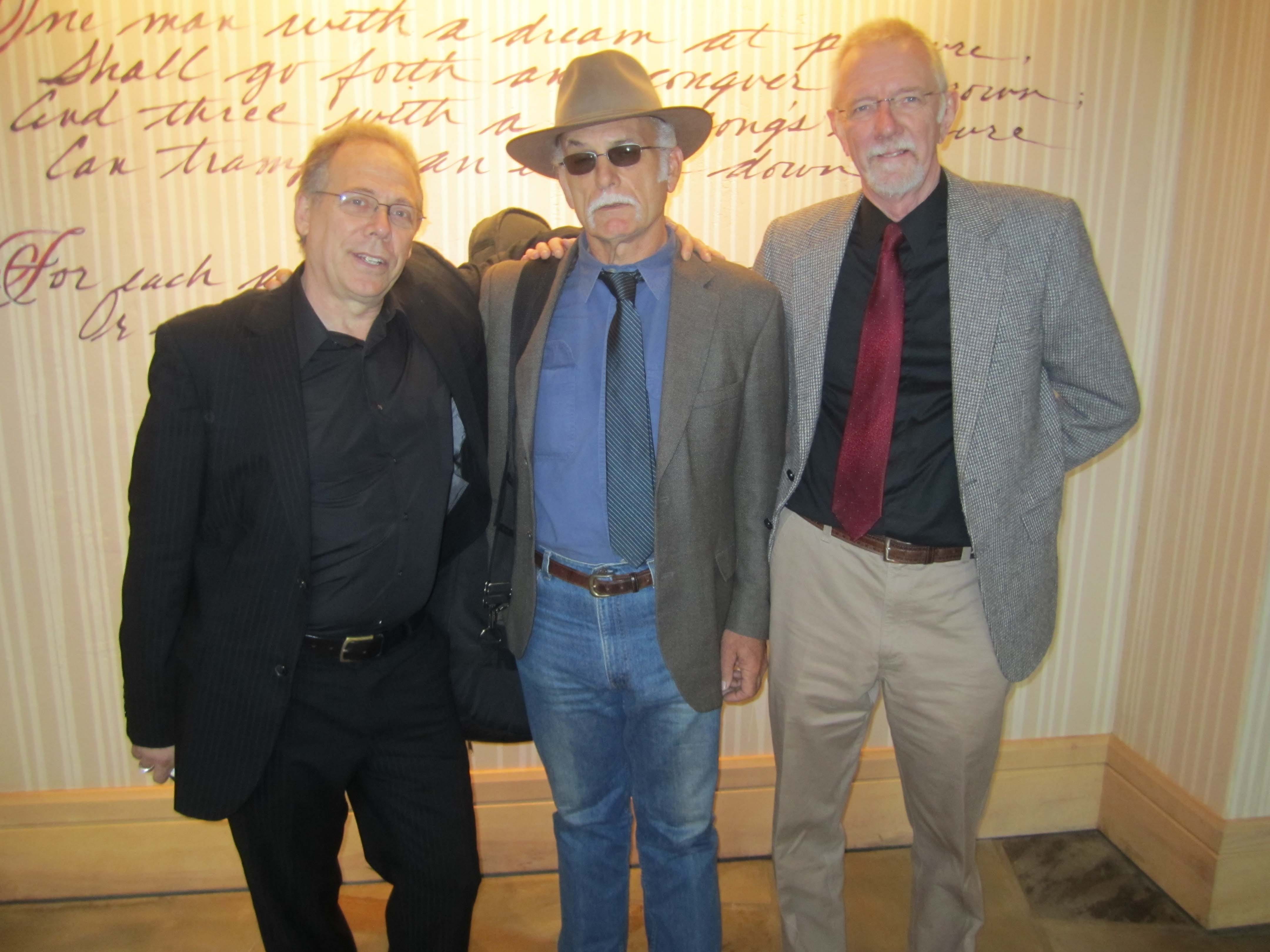
“I had to fly to LA, but I had to get my upright bass there to be in the play,” Webber recalls. “Danny prefers to drive, so he loaded up my bass and drove it to LA.”
Webber’s role in “Exit 10” was unusual.
“I set up above the stage on a platform with my bass, and my only job was to play bass solos as people came into and left the theatre,” he says, chuckling. “I was just up there, riffing whatever came to mind.”
In late 2024 or early 2025, Webber asked Darst if he could show him a song he had written years earlier. Darst said sure, and together, they worked on the lyrics Webber first penned almost 40 years before.
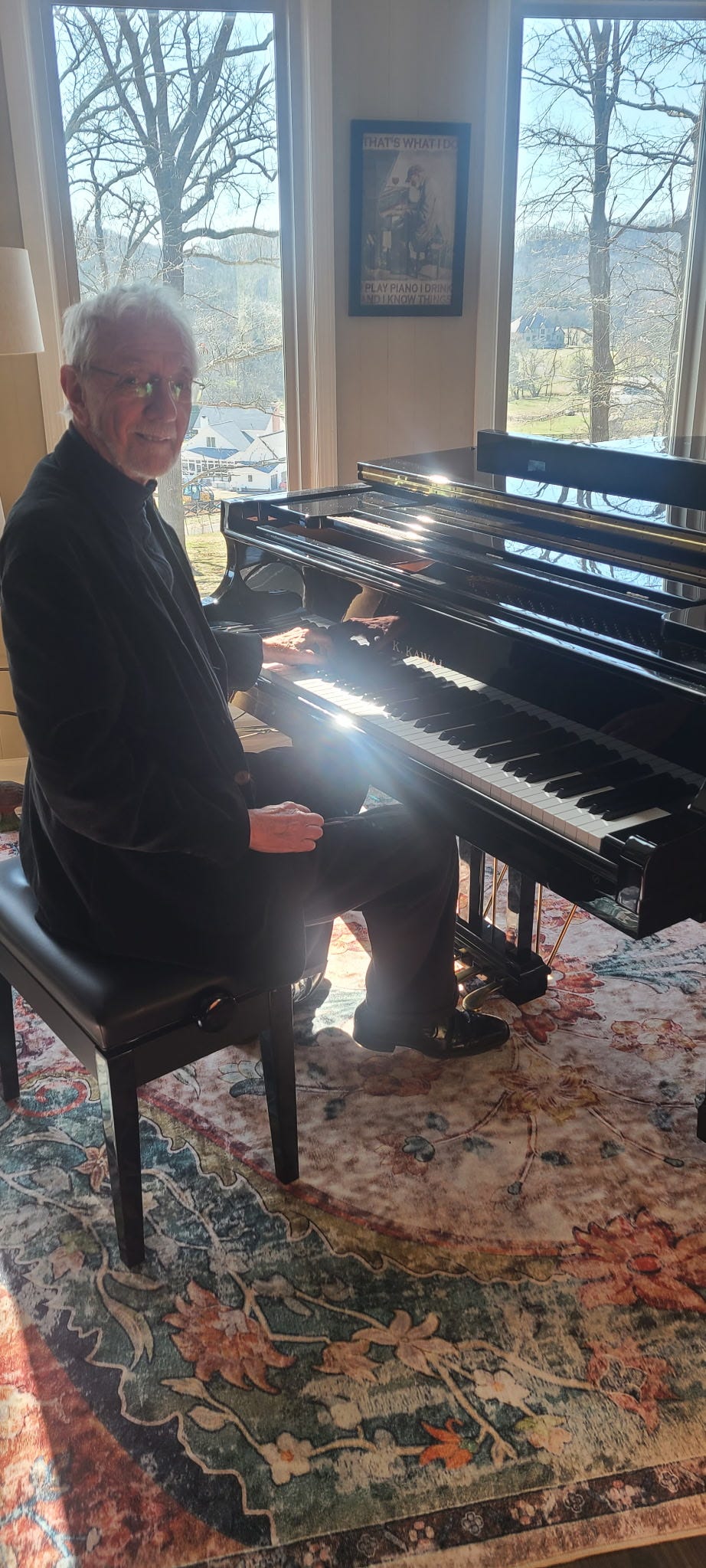
When they had finished and it came time to cut a demo, Webber played piano, then added his bass, and asked a Nashville friend play harmonica and steel guitar.
Then they needed a singer. The sound engineer, Matt Johnson, suggested Webber sing it.
Today “Ridin Away” is in the hands of “various people” and available online, one of several musical projects Webber continues to shepherd as he follows his muse.
Over the years, “Limo Mike” became a private driver for a local businessman, taking his employer on runs both near and far - including a visit to our home in Georgia not long after we moved here. Today? He is now “Trolley Mike,” driving the Franklin bus trolley four days a week, showing tourists around his growing town while continuing to enjoy “operating heavy machinery."
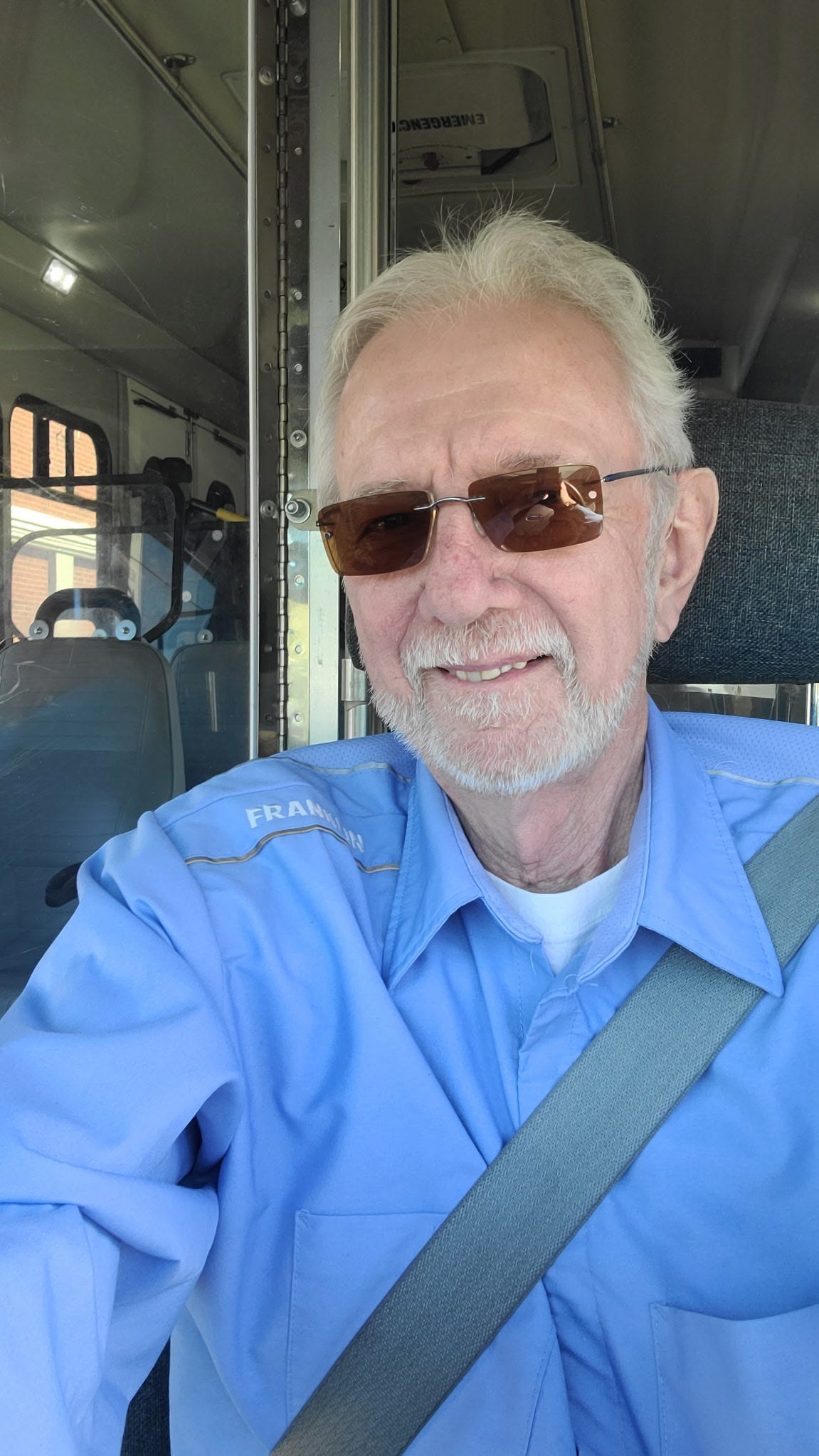
As we came to the end of our conversations this month about his career as a professional musician, I asked Webber what he thinks when he looks at his life today, driving the trolley and then coming home to work on his music, connecting whenever possible with other musicians.
“You have spent more than 60 years performing for people, sometimes tens of thousands of people at once, on stages across the country and the world, hearing their cheers as you walk off the stage,” I said. “Do you miss those cheers?”
Webber laughed, as if the thought had not occurred to him, which I am pretty sure is the case.
“Look, I’ve been lucky - I couldn’t have been any luckier, and I don’t think I could do anything else,” Webber says. “My only thing, still, is just to keep on playing.”
[Note: Thus ends the series on my stepdad - thank you for reading. I had planned to stop here, and then something happened I had not anticipated. Expect an epilogue in a few days.]
Scott! I've loved your articles about Mike! It's brought about some very long ago memories!
I love the way you write.
Much love always,
Kathie