
#87: "With Or Without You"
A Bass Player's Pursuit of Musical Nirvana (Part 4)

[Disclaimer: I am not a music historian. These articles are based on my conversations with my stepdad, Mike Webber, and whatever info I could confirm with a quick Google search, as well as, here and there, my own memory. I do not let exacting accuracy get in the way of the tale.]
Among the many things I hadn’t planned on happening as a 26-year-old in July 1990 was sitting down to an afternoon meal with Naomi and Wynonna Judd, their band - and “Deakon,” who at the time held the office of Oakland chapter president* of the Hell’s Angels. Deakon was accompanied this day by his girlfriend, Priscilla.
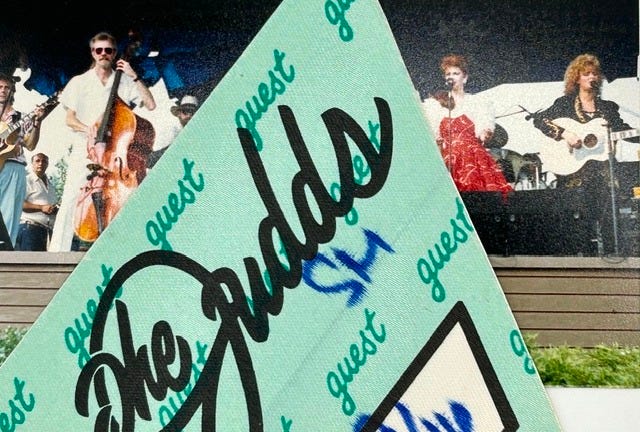
Also at the table? My stepdad, Mike Webber, a lifelong professional musician who had played bass for The Judds for six years. He had given me and my friend, Steve, backstage guest passes to the show.
Turned out that Deakon (yes, that is how he spelled it) was a huge fan of the Judds, especially Wynonna. He would travel up and down the West Coast seeing The Judds sing – as the mother-daughter country superstars would just a few hours from now at the Concord Pavillion, in the East Bay, located across the bridge from San Francisco.
Deakon’s presence was a surprise only to Steve and I. That’s because somewhere along the way, someone with The Judds had made the decision that whenever Deakon turned up before a show, giving him a place at the dinner table was a wiser course of action than telling him he had to leave.
And Deakon had behaved like a perfect gentleman, as far as I could tell. [Note: The Judds apparently weren’t Deakon’s only connection with country music. There’s a Facebook post that claims he “served as Waylon Jennings tour manager and concert promoter, under his company Charlie Magoo Productions, which he owned with Fu Griffin (Oakland HAMC).” I don’t know if that’s true, but I would not be surprised if it is. Also? I wonder how he defined “tour manager.”]
As we ate, Randy Travis wandered by, wearing a striking, southwestern-style jacket. He passed our table with a nod and walked about 15 yards away, where he stopped to admire the view over the area hills.
At one point someone who had finished their meal (I think it was a band member) needed a twist tie to help close a container. They asked our table if anyone had a rubber band.
Deakon startled me, and Steve, by suddenly snapping out an arm and reaching into Priscilla’s pony-tailed hair. There he forcibly yanked a thin hairband free, working it down the ponytail, while Priscilla looked calmly ahead with a wary expression.
“’This work?” Deakon said, tossing the hairband toward the band member.
At the time, the Judds were global stars (the year before, the Judds had been on The Tonight Show - you can see Mike Webber playing bass in the background). So was Travis, of course, and some of the opening acts that day were developing followings as well.
Others might have given at least a few fingers if not an arm to be where I sat that evening. But the star power around me didn’t much matter – I was not a country music fan, I was there to see my stepdad.
I was not what the band referred to as a “gerhm.”
“Gerhms are part of the silent knowledge of life on the road,” Webber chuckles. “Ask any roadie where the gerhms are, and they will tell you. A gerhm is someone who will spend the night in line waiting to get a ticket, and then at the show will do anything they can to get as close to the act as possible for autographs, for contact, possibly for their own validation.”
Gehrms were super fans, and they were both appreciated and avoided by musicians who knew what to look for.
“Gehrms are good in that they like what you do and as a result they bring you money – if it wasn’t for gehrms, I’d have nothing,” Webber says, reverently. “But also they constantly looked for access, sometimes through people outside the band, or just did what they could to get as close as they can to the act including the tour bus, which was fairly accessible at outdoor shows like festivals.”
When the gherms got too close, Webber said, if the band was relaxing onboard he would grab the mic to the bus’ external PA system and repeat, in a low, ominous voice, “Stand away from the bus – do not look at the bus.”
I was, in fact, familiar with gerhms. Less than a year earlier, I had my own run in with them after a different Judds show.
After seeing Naomi, Wynonna and my dad perform at The Shoreline Amphitheatre in Mountain View, Calif, Steve and I returned to the band’s hotel, the Hyatt Rickey’s. Once there, band members split up and headed to different hotel rooms.
Also waiting? Gerhms, all female, trying to get close to the band, asking where certain headliners, or even other band members, were staying.
I know this because in one raucous hotel room two women walked up to Steve and I. One woman held a black marker, and pulled down the neckline to her shirt to expose her upper chest.
She asked us to sign, I assumed because she thought we were in a band.
Disappointingly honest, I replied, “But we’re not in a band.” The two women promptly lost interest in us and headed away to find other people.
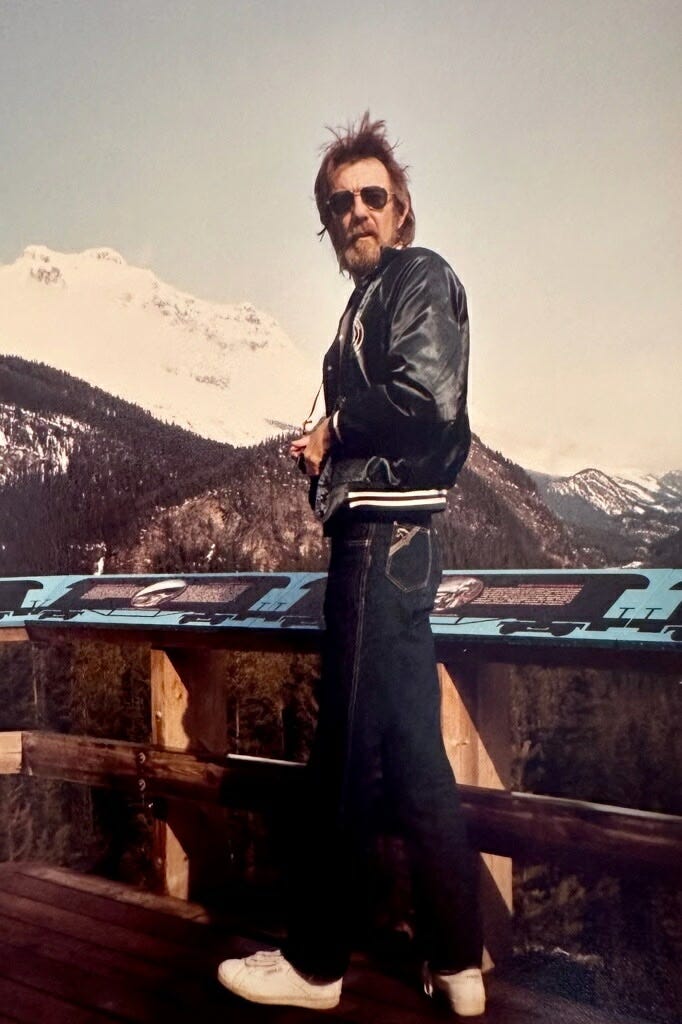
Anyone could be a gerhm, Webber said. One time while playing in Dublin, Ireland, in the late 80s, after the show several musician types came backstage to talk to “the girls.”
“I assumed it was a local, Irish band, I didn’t know who they were,” Webber recalls. “One of them invited everyone back to his house. I said no, I’m not getting involved in that. I was more interested in the Guinness.”
The band was U2. The party was at the home of The Edge.
Turned out U2’s drummer, Larry Mullin Jr., allegedly had a passing infatuation with Wynonna, and had come to hear her sing.
It’s easy to excuse Webber’s myopia, when you consider that when The Judds started out and for a while afterward he was not only the bass player. Webber also volunteered to serve as the act’s part-time bus driver and road manager.
“I’ve always loved operating heavy machinery,” Webber says, happily. “Cars, buses, airplanes - all of it. So when we needed a relief driver, the primary driver, Gene, taught me how to drive on a 5-speed Eagle bus.”
Webber enjoyed driving it so much, he would often take the bus home after a tour, backing it up the long, country driveway. His wife, Janie, would strip the bus bunks and wash the sheets, then remake the beds for the next trip.
“I would take it to the grocery store,” Webber laughs. “I just loved driving it.”
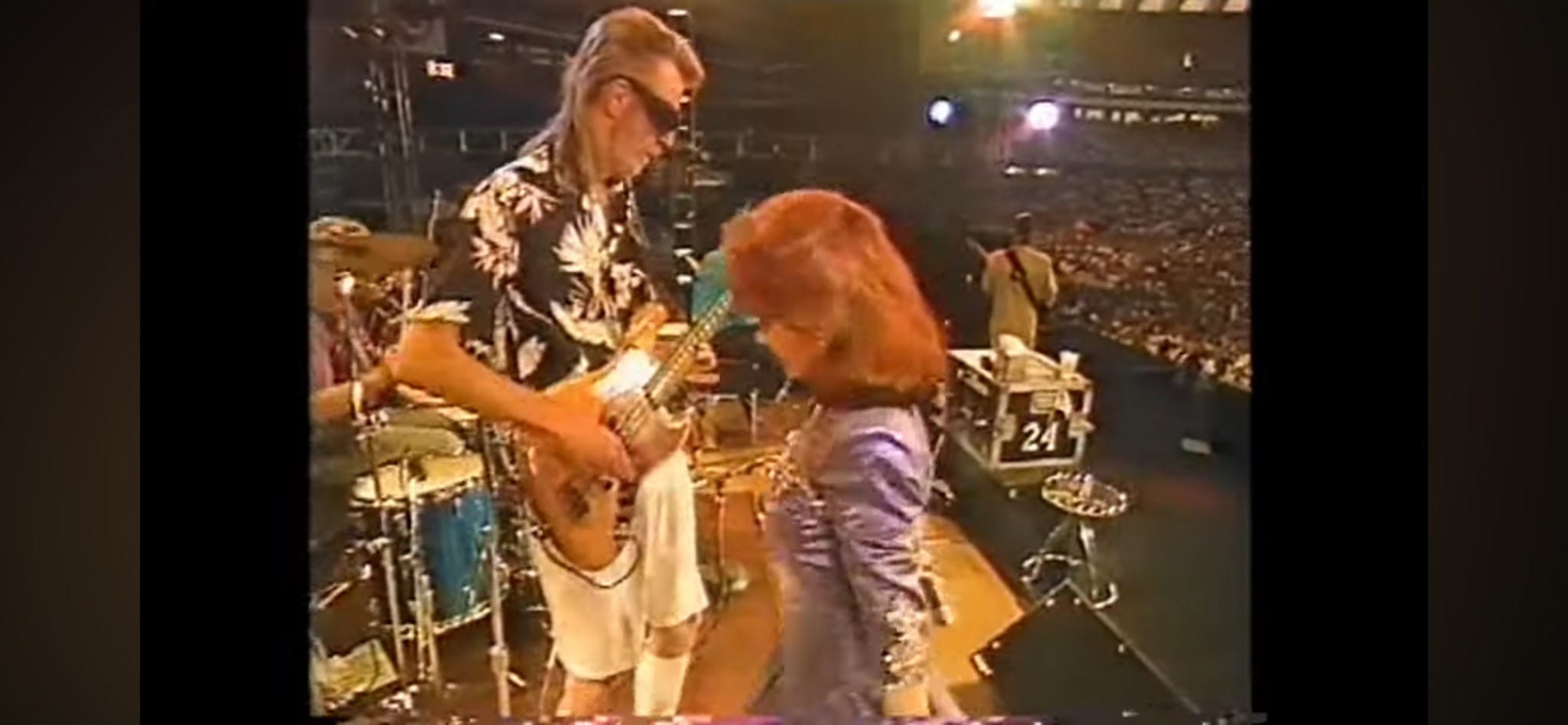
At The Judds’ peak, the band would be on the road 180 days a year. They played across America and through much of Europe (“they loved country music in Europe, huge fans”).
But as the years went on, Webber noticed growing strain between Naomi and Wynonna. Good-natured jokes became more pointed. Arguments became more frequent.
They had been on the road a long time, and were, after all, a family act - and he had seen this show before.
Webber reached the seven-year mark playing with The Judds in 1991, matching his long run with Clint Holmes and the Bacchanal in the 1970s.
Then, just like with Holmes, the show was suddenly over.
*A belated RIP to Deakon, who passed away in 2009 at age 65. It was a pleasure meeting you, sir.
Coming Up: Life after The Judds, Limo Mike and the return of the song that took 40 years to write, “Ridin’ Away.”