
#86: "Why Not Me?"
A Bass Player's Pursuit of Musical Nirvana (Part 3)

[Disclaimer: I am not a music historian. These articles are based on my conversations with my stepdad, Mike Webber, and whatever info I could confirm with a quick Google search, as well as, here and there, my own memory. I do not let exacting accuracy get in the way of the tale.]
In February, maybe March, of 1984, Mike Webber settled into his Datsun 310gx and headed for the interstate running through Nashville, on an errand he doesn’t recall.
The purpose doesn’t really matter. The important thing about this trip was the car radio was on, as usual, and songs and commercials paraded through the miles while he absentmindedly listened.
For more than 20 years, Webber had been a professional bass player, bouncing from band to band and gig to gig, consumed with a desire to play music anywhere, anytime. The radio was always on in that Datsun.
Less than a decade earlier, that passion to play music had resulted in Webber becoming part of an act that hit it big, including a song that reached #2 on the U.S. Billboard Hot 100 charts in 1973.
That band had split up suddenly and unexpectedly in 1977.
Now, as he drove on the interstate that day in 1984, Webber was about to finish a two-year gig playing bass with Danny Davis and the Nashville Brass.
Until the Davis job, it had been a tough couple of years in Nashville. Webber had moved there from Virginia in 1981, after a divorce.
Just getting established in Nashville had been slow going. The Nashville music scene at the time was close knit, and much smaller than today.
“I went out to music stores to meet some guys, that’s where you could most easily make connections,” he recalls. “I had even made up my own business cards. That landed a few small gigs, which led to working with Danny, and my reputation had started to grow.”
Webber brought decades of expertise to the table, but in the music world “they had to hear you play,” Webber said.
Touring with Davis had helped, and now that gig was coming to an end.
So as he drove his Datsun that day in 1984, Mike Webber was once more unsure where the future would take him.
Then a voice on the radio snapped him out of his reverie.
“A song came on and I heard this voice, this woman’s voice singing, and I had to immediately pull over to listen,” he recalls, wonder still in his words. “I thought, ‘who the hell is THIS?’ I’m a tone guy, and I could hear in her tone that she was a musician. This chick meant business.”
He listened to the entire song but the DJ didn’t repeat its title nor the artist. Webber remembered its sound, though, even as he picked up a brief gig days after the Davis tour ended.
“The deal was 3 days rehearsal, and 3 days performing, for $600 – I said, ‘I’m your guy!’” Webber laughs.
The artist that needed the band? A then-relatively unknown Christian music singer named David Meece. [Note: Meece went on to massive success in the Christian music world, and was inducted into the Christian Music Hall of Fame in 2008.]
It was during that gig that Webber met guitarist Don Potter.
“We went on the road with David for those gigs, and proved that we could ‘play well with others,” Webber said.
Potter noticed. After the last performance, while on the bus returning to Nashville, Potter announced to the band that he had signed on to play with a new singing act. He asked if anyone was interested in joining him.
“I asked who it was, and Don said it was a mother-daughter act,” Webber remembers. “I told him absolutely not, I had seen this movie before. Been there, done that, and I’m not doing it again. The family thing is a nightmare.”
By that point, Webber had played in bands for husband-and-wife singing acts not once but twice during his career. Both times, the experience led to the couple bickering and an overall uncomfortable position for the band – including a certain bass player.
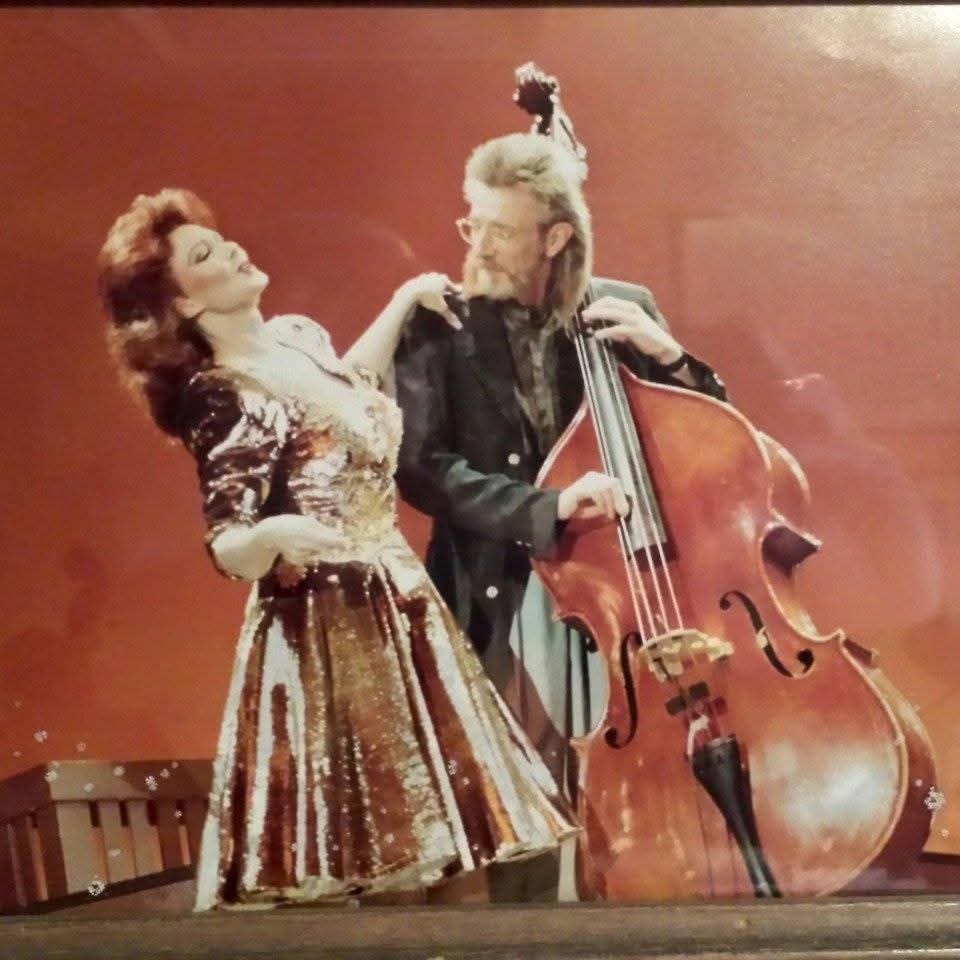
But Potter wouldn’t give up. After they had returned home, he invited Webber to his house one afternoon. “‘I just want you to listen to this,’” Webber recalled Potter telling him.
Webber figured what the hell, he was trying to meet more people in Nashville, and he had liked playing with Potter.
“So I go over and he pulls out an EP and puts the needle down on the first track - and it was that song I had heard in the car!” Webber exclaims. “I just about shit myself. I said, ‘Are you serious?’”
That singer he had heard was Wynonna Judd, accompanied by her talented mother, Naomi. The name of the six-song EP was, appropriately enough, Wynonna & Naomi, Potter said. That was the act he had joined.
“I told Don I was in,” Webber says.
And just like that, Webber was now the bass player for The Judds.
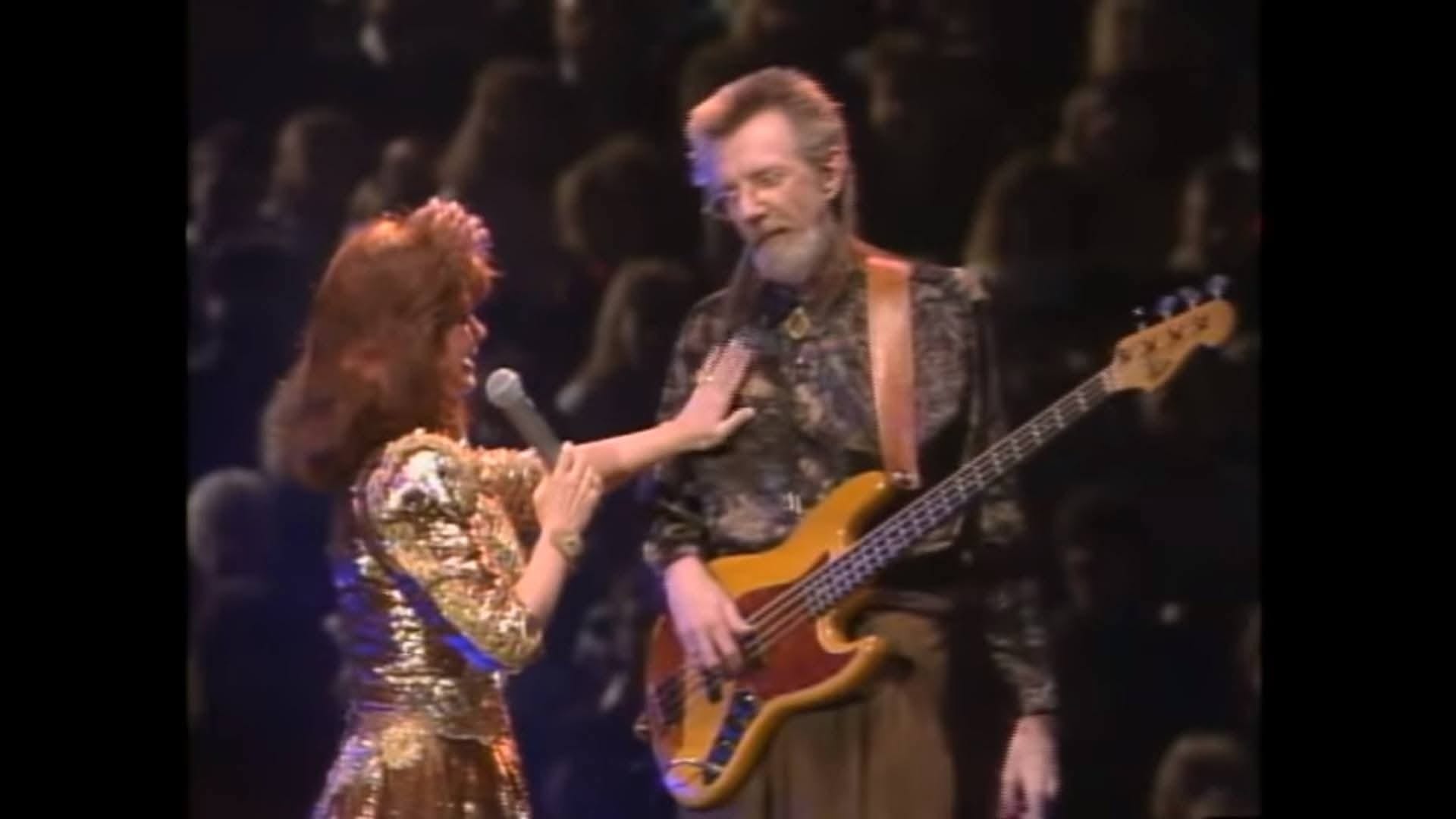
The initial rehearsals went well. Naomi and Wynonna Judd were friendly, polite and knew how to sing. There wasn’t much ego on display, Webber recalls.
“Wynonna was just 19 at the time, and they had never done anything like this before,” he says. “We (in the band) were the pros, we had been around longer. It was all pretty low key.”
They hit the road for their first gig, at Billy Bob’s Texas in Fort Worth, a massive music venue. Billy Bob’s would often book “showcase acts” – singers and musicians that representatives from other venues, as well as promoters and record labels, could hear and decide to book or sign.
Joining them on that bus ride to Fort Worth were Pinkard & Bowden, an established comedy duo that was sort of a two-man country version of Weird Al Yankovich, creating parody songs as well as writing original music. They one day would write a parody of The Judds’ hit “Mama He’s Crazy” called “Mama She’s Lazy” that would reach #39 on the country charts.
On that first gig, the Judds opened for Pinkard & Bowden at Billy Bob’s.
“Billy Bob’s is as ‘cowboy’ as it gets,” Webber recalls. “Guys line dancing with beers in their jean’s back pocket, while act after act goes on. It was great fun meeting other acts backstage.”
On the bus ride back to Nashville, their driver stopped at around 2 a.m. at a truck stop to use the restroom. Pinkard & Bowden’s “Pinkard” – James “Sandy” Pinkard - awakened by the stop, also staggered off the bus, wearing only his underwear and flip flops, Webber says, getting into the story.
“The driver didn’t see him get off, and none of us realized he had left, so the driver came back and the bus drove off,” Webber chuckles. “Pinkard came out, saw no bus and panicked. He had no wallet, no ID and there weren’t any cellphones.”
Pinkard eventually flagged down a truck driver and explained his interesting predicament.
Either because the truck driver was kind, or because he recognized Pinkard, the driver turned to his CB radio. After lots of “Hey, good buddy…” chatter along the Interstate, the band bus was finally notified and waited for a truck ferrying Pinkard to catch up, an hour later.
“He was pretty shook up,” Webber recalls.
On that auspicious note, Mike Webber had begun another climb to the top.
Little did he know that his music role with The Judds would soon expand to include road manager, media coordinator - and driving their own tour bus.
It was the beginning of “Limo Mike.”
Next Up: We finally get to “gerhms,” Mike becomes “Pops” and I meet Deakon, Oakland chapter president of the Hell’s Angels – and his girlfriend, Priscilla
Loving these. Don Potter is a Rochesterian.