
#83:"Mama, He's Crazy"
A Bass Player's Pursuit of Musical Nirvana (Part 1)

[Disclaimer: I am not a music historian. These articles are based on my conversations with my stepdad, Mike Webber, and whatever basic info I could confirm with a quick Google search, as well as, here and there, my own memory. I do not let exacting accuracy get in the way of the tale.]
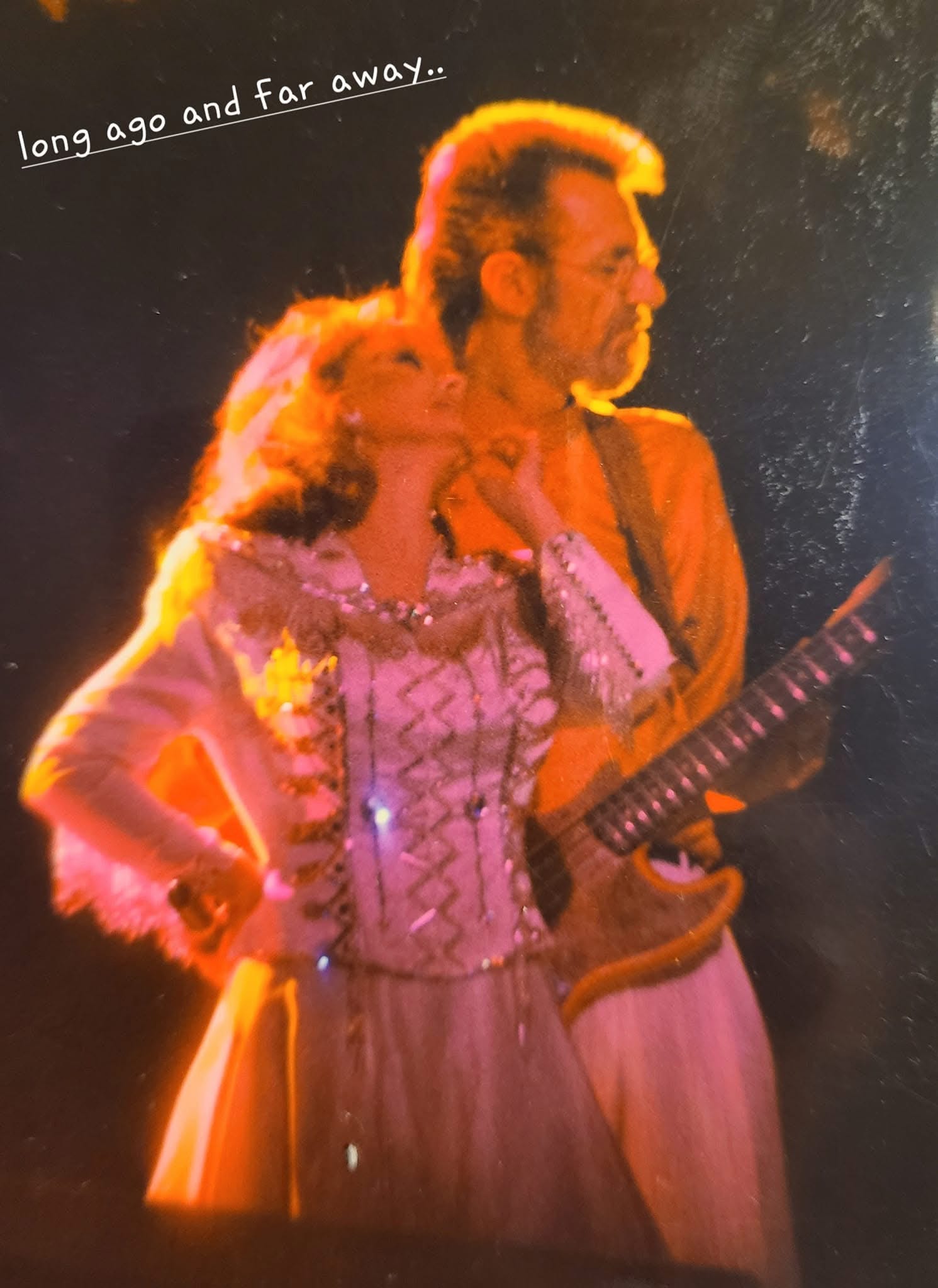
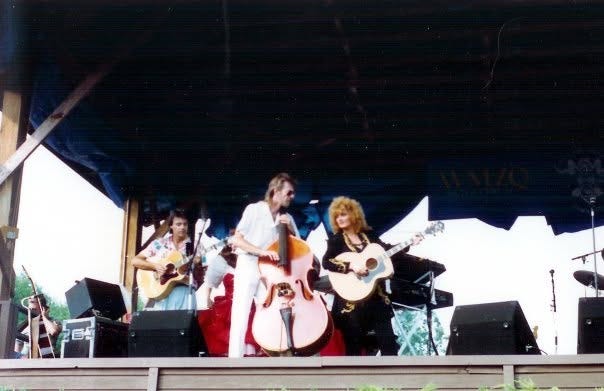
During The Judds’ nearly 10-year stretch in the 1980s as one of the hottest country music acts in America, if you saw the Grammy-winning, mother-daughter duo perform live you might have noticed behind them, certainly during band introductions when Naomi Judd called him “Pops,” a tall, bearded man playing bass.
A decade earlier, you would have seen him playing behind rising star Clint Holmes during Holmes’ rocket ride to #2 on the U.S. Billboard Hot 100 with “Playground In My Mind.” [Note: #1 was Paul McCartney and Wings’ “My Love”].
Soon after that run, you might have caught him backing up Chet Atkins, or as part of Danny Davis and the Nashville brass, or in any number of gigs at hot spots around Nashville before Webber returned to the charts with The Judds.
Today, you can hear his current work online, like his song “Ridin Away” on Spotify. The song was 40 years in the making (more on that later) and yet somehow sounds like it was pulled from the Taylor Sheridan drama, Landman, now in its third season.
Michael Webber played bass in dozens of bands over six decades in the music business, by his reckoning. Little of it was planned, at least by him.
It was simply the life of a musician looking for the next gig, so he could keep doing what he loved.
“I know I’ll never get rich at it – and it doesn’t matter,” Webber said in a series of conversations with me over the past month. “I have a burning passion to continue to create music. It engulfs me. It’s life. My only thing has always been to keep playing.”
Mike Webber is also my stepdad.
The Beginning
Mike Webber’s mother, Marie, taught dance lessons in Roanoke, Virginia, where Mike was born in 1946. The constant recitals meant constant music, and young Mike was drawn to the musicians who walked in and out of his family’s lives as part of his mother’s thrown-together recital bands during the 1950s.
While he took tap lessons from his mom, it was the music that fascinated the youngster. The question was, which instrument to play?
He tried piano, trumpet and trombone (“I was told I ‘didn’t have the teeth’ for brass instruments”) before landing on the string bass in seventh grade.
“My mom aways said, ‘if you want to play anything professionally play a stringed instrument, you’ll never be out of work,’” he recalls fondly. “And every band needs rhythm section players.”
It was an interesting choice for a teen. Playing bass isn’t sexy. Lead singers get most of the spotlight, and lead guitar players get the rest. Drummers are quirky, true, but even they get to show off during energetic, flashy solos.
But the bass player? Who remembers the bass player? What drew a 7th grader to the upright bass?
Well, young Webber wanted to be around music as much as possible - and the bass is part of the rhythm section. Plus, the instrument itself intrigued him.
“The sound of it, the size of it – I didn’t think my hands would fit on a violin or cello,” he remembers. “Also, I liked the idea of not having to hold it. It stood upright, and you approached it to play. It became a relationship, I guess.”
He liked it so much, he failed 7th grade, because “I became consumed by it.”
But young Mike Webber had begun to play.
Building Street Cred
His first mentor was Eugene Fitzgerald, “the go-to guy” for bass playing in Roanoke, he recalls. Then his salesman father (“who thought he was a drummer,” Mike chuckles) connected him with a friend, Bernie Whitman, who had a band that played country clubs and dance halls.
Just like that, Mike Webber was on his way. The band, which featured a piano, saxophone, trumpet, trombone and Mike on bass, played one gig after another.
In 1960, he joined the local musician union – as a 14-year-old. That led to more connections, and more gigs.
Sometimes he would get paid. Other times, not so much. “They weren’t always great about paying underage musicians,” Webber recalls.
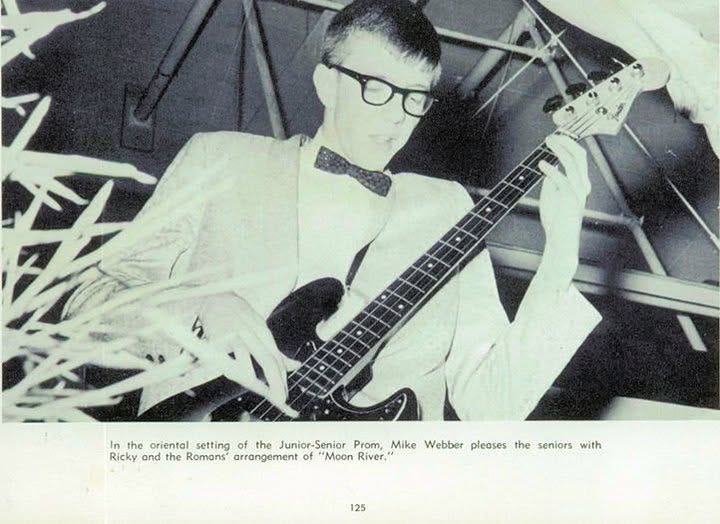
He could already read music (surprisingly uncommon among gigging musicians). His frequent playing, with a variety of bandmates, taught him to also “use my ear.”
“We would play existing songs out of a playbook, and sometimes all I had to go on was the number called out on stage,” Webber recalls. “If you didn’t know the tunes by heart, you didn’t work.”
Playing gigs also taught Webber about life beyond music. At the fancy Greenbrier resort in West Virginia, for instance, “the musicians had to use the kitchen to enter the hotel,” he remembers.
“Musicians were second class citizens – we could be a rowdy bunch,” he says, laughing. And it wasn’t about race - or at least, not only about race. “We also drank a lot,” Webber adds.
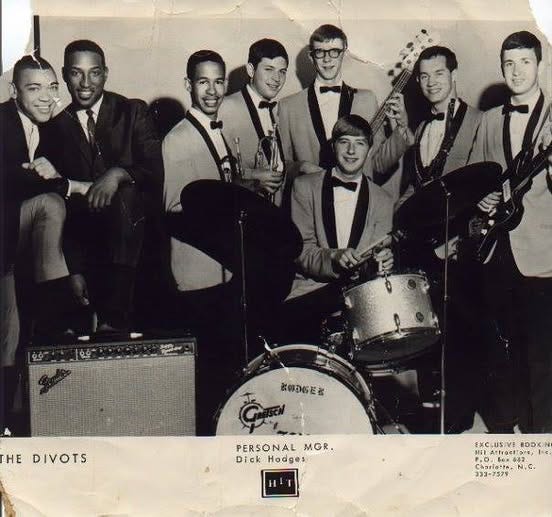
By 1965, when he graduated from high school, Webber already had racked up hundreds of hours of music performances.
In The Navy
Unfortunately, the Vietnam War was underway, and the draft was coming. Webber decided to enlist in the Navy reserves because the 6-foot, 4-inch teenager “did not want to crawl on my belly with a rifle,” he says.
“I also liked boats,” he recalls. “Really, I was just trying to survive.”
The problem with being in the reserves was that the meetings required to remain in the reserves occurred on the weekends, and Webber had gigs. While the Navy tried to make him into a radio operator, Webber hustled for music opportunities – as many and as often as possible.
And choosing between playing music and attending Naval reserve meetings was a no brainer for a talented bass player chasing his muse.
Eventually the Navy informed Webber that because he had missed so many weekend reserve meetings, he had to go on active duty.
As that date approached, a minor car accident delayed his transition to active duty while his injured knee healed (“the Navy sent an airplane to retrieve me from the Roanoke hospital and take me to a Navy hospital in Portsmouth, Virginia,” he recalls, ostensibly to control costs).
Webber was sent to a cargo handling battalion in Williamsburg, Virginia. “My one mission there was to load cable in Newfoundland, 24/7,” he says in a tone that clearly indicates the task wasn’t enjoyable.
Then, through a series of connections that included his high school band director and the executive officer of the Naval School of Music in Virginia Beach, Webber applied and was admitted to the school in 1967.
“If it had taken a week longer, I would have been given orders to ship out to the South Pole for six months,” he remembers, with a quiet “whew.”
The Naval music school was where he met Clint Holmes, an Army trombone player and occasional singer who had plans.
Webber’s musical journey was about to reach new heights.
Next: Mike Webber plays tennis with celebrities, the band comes up with a name and, later in this series, I commit a colossal blunder with a groupie.